By Sophia Brunetti ‘23
Derby is one of Connecticut’s tiniest cities. It covers a 5.3 square mile radius with a population of 12,000 people. Most people would assume that a town like this would be close to one another, and it would be a town without any quarrels. However, that is not the case for Derby. It may not be visible, but Derby students typically perceive a divide between the two sides.
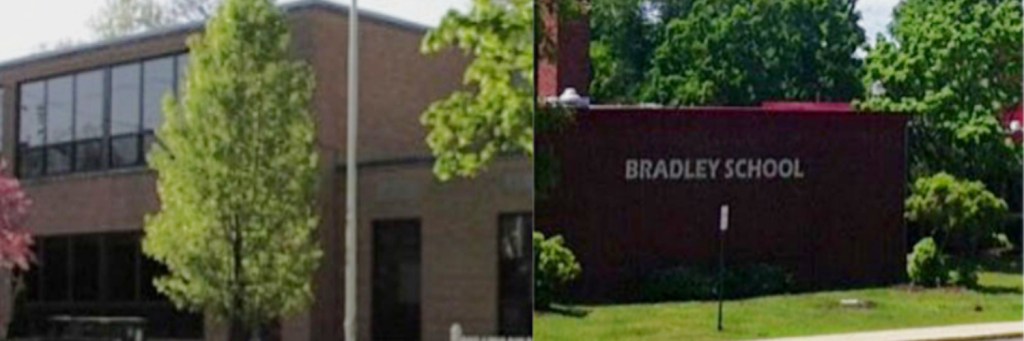
To many at DHS, the two sides are split by the Route 34 bridge that extends over the Naugatuck river. We’ll refer to the sides as ‘Bradley’ and ‘Irving’ due to the fact that Bradley Elementary school is on one side while Irving Elementary school is on the other. In my opinion, the two sides being separated has caused several problems.
Let’s start off with the elementary schools. One of the biggest questions asked by many parents and students is ‘why are there two elementary schools in Connecticut’s smallest city?” Why, and how? How is it that there are two elementary schools, and why have these schools caused such a large divide between the two sides?
It’s a known fact that these two schools have been one of the causes of what I call , “the Derby Divide.” Kids in each school are raised differently than the kids from the other school. They’re taught differently, have different friend groups, and are often opposites in more aspects than one.
I’ve lived on both sides, and I’ve gone to both schools. I’ve heard countless stories and rumors that were spread about each side and yet could never form an opinion about which were true. Bradley kids call Irving kids one thing, while Irving kids call Bradley kids another thing.
Kids on the Bradley side are stereotyped as judgmental, arrogant, high-class, and smart. Kids on the Irving side are stereotyped as harsh, judgmental, lower-class, slackers, and as having lower grades. Most of these stereotypes are negative.
Irving students respond to these stereotypes by distancing themselves from others. Other kids from this side sometimes will fulfill the stereotypes given to them from the Bradley side. The response from the Bradley side is slightly different from that of Irving. Some kids might feel insulted by the stereotypes, which also results in them distancing themselves from the other side. Another reaction from Bradley is that they have a stronger negative perspective of the other side, all because of a few words and stereotypes.
These stereotypes are some of the reasons why there is a divide between the kids specifically in this town. Some would agree that there is a divide. Others would not. However, even if everyone were to see it, most would not care enough to fix it. But I do. In an ideal world, we would be able to fix it.
In an ideal world, these stereotypes would not exist. In an ideal world, there might not be so much negativity between these two sides. In an ideal world, Derby would not be divided. If we wanted to work towards fixing the divide, there is one thing that everyone needs to know. We need to identify the problem and ultimately be honest about it. We need to come together to see the situation that is at hand.
Only one major solution comes to mind. Combining elementary schools would be a solution to this problem. These two schools come together for middle and high school, but by then, the negative stereotypes already exist. If we were to combine elementary schools, kids would not be taught stereotypes as much as they are in their schools now. They would not be taught these stereotypes so early in life, and they would be able to know kids from the other side before judging.
We should combine elementary schools so that way kids are not taught these stereotypes at a young age and so that we would have a closer community. With only one elementary school, there wouldn’t be an “Irving” or a “Bradley” side – there would just be Derby.
 The Raider Press