
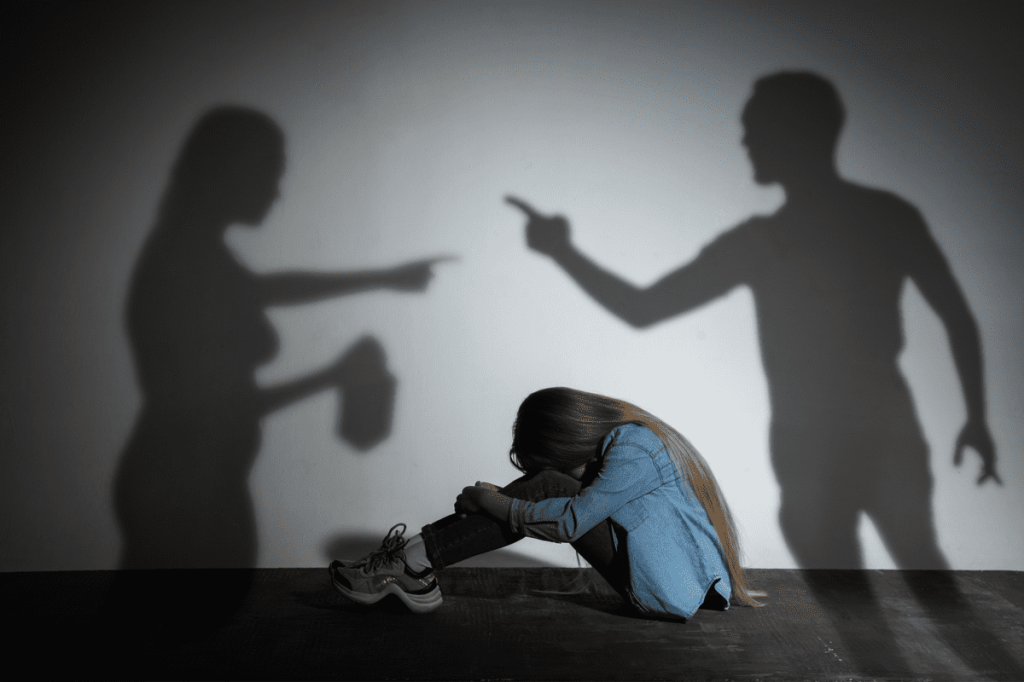
Image from Pedrick Law Group: Around the world, kids are deeply impacted by the effects of domestic violence.
By Quinlan Gray ’25
Every year in the United States, there are around 3.3 million children, ranging in age from three to seventeen, who will witness parental abuse (Rice and Galbraith). Among these children, there can be various different responses to domestic abuse which can range from just about nothing to more severe things such as lifelong depression, anxiety, and even PTSD (“Impact on children and young people – Women’s Aid”). The effects of domestic violence, which may not always be easy to see just by looking at a person, can have a profound and significant impact on children, whether they are experiencing it firsthand or witnessing it. Support should be given to kids facing these challenging and devastating situations. For example, getting children to a safer environment and providing them with various mental health resources to assist them with managing the effects of the trauma they feel and struggle with (Lloyd). As a community, and as a population, we should all be working together to provide these things for kids in situations where domestic violence is present.
When it comes to domestic abuse including children, about sixty-six percent of kids who are abused are between the ages of twelve to seventeen (RAINN). This data shows that every day, as students ride their buses to school, walk through the hallways to their classes, shop in the malls, or are virtually anywhere; any one of them could potentially be a victim of abuse. Though some acts of abuse are reported and these reports can help to stop the abuse and the effects that follow, there are also many cases that go unreported. There are 3.3 million abuse cases reported across the US yearly, and this number is excluding the non-reported instances which could be between hundreds to a million or more, meaning that this problem of abuse continues past what people can see (Rice and Galbraith). Along with this, “One in seven (14.2%) children and young people under the age of 18 will have lived with domestic violence at some point in their childhood” (“Impact on children and young people – Women’s Aid”), and as well as: “More than 15 million children in the United States live in homes in which domestic violence has happened at least once” (Basile et al.). These statistics show just how extreme the issue of domestic violence has been and continues to be; children and teens are having to suffer the backlash of it all and the effects of this abuse can change more than just how these kids feel.
Depending on what age domestic violence first occurs around kids, it can have many different effects. In younger kids, the trauma can change their views on adults and they may lack trust in the adults in their lives. This trauma can cause kids to live in secrecy, hiding things from their families due to the fear they feel. Building off of this, “Children’s responses to the trauma of witnessing domestic abuse may vary according to a multitude of factors including, but not limited to, age, race, sex and stage of development” (“Impact on children and young people – Women’s Aid”).
When younger kids such as preschool children witness domestic violence, it is very common for them to act quite a bit younger than they are. These children often pick up old habits like thumb-sucking, bedwetting, crying more often, and whining. Children who are in school can begin to develop antisocial behavior, they may even struggle with a feeling of guilt due to witnessed abuse as they typically take the blame for the abuse their parents or themselves have to deal with, which can have a huge impact on their self-esteem.
Teenagers who witness forms of domestic violence tend to act out as their response to their current situation. These teens may also begin to fight people, skip school, engage in risky sexual activities, or begin doing drugs and alcohol to ease their pain, all of these things also make it more likely for these teens to end up in trouble with the law. However, no matter what age these children are, if they grow up in an abusive household, they almost always will fall victim to these problems (Plumptre).
To help kids who are dealing with forms of domestic abuse, there are a variety of different tools to help. Between teachers at school and family members or trusted friends, children should always know someone, somewhere, will be there for them. Children who attend school can use their teachers as a person to talk to, especially since, “Teachers are well placed to play a pivotal role in identifying and responding to domestic violence since they have contact with children more than any other service” (Lloyd).
Teachers aren’t the only people who can help though, children and teens can also get help from many other resources. Kids who have witnessed abuse can talk to a trusted friend or their friend’s parents. There are also various different hotlines that kids can call if they are in trouble or need help dealing with their trauma from these forms of abuse (Lloyd). Many websites are also available to help, often containing things like a call button or a chat button to speak to someone who can help (National Domestic Violence Hotline). Children and teens should know they do not need to be scared to ask for help; if they can get out of the situation they are in, it will better their futures.
Though domestic violence may not occur everywhere and some people may say that the trauma from it can easily be handled, however, these people do not necessarily know how it may feel to deal with all of the trauma and pain felt by those who have been exposed to violence. Without knowing the pain these children and teens have to go through, these people should not, and cannot make assumptions based on what they have heard. Assumptions cannot be made for multiple reasons, of course, but a major one is, “Each child responds differently to abuse and trauma. Some children are more resilient, and some are more sensitive…” (Basile et al.). Knowing this, people should take into consideration how different people can react to the trauma they have experienced. People can also do what they can to help assist those who have been victims of domestic abuse and violence to assure their safety.
When everything is taken into consideration, we can see that the effects of domestic violence on children can have life-altering costs, and it is in our hands to provide these children with the help they need to deal with the pain they have experienced. Not only is it our job to provide those victims with help, but to do our best to help keep them safe. The multiple effects like depression, anxiety, PTSD, and others can all be eased if we work together as a community and as a population to help end domestic violence. We can help reduce the number of 3.3 million or so people who are witnessing domestic violence a year; children, teens, adults, anyone, anywhere, can help by just providing a safe place for these people and an environment where they can talk about how they are feeling (Rice and Galbraith). Now, let’s make it our mission to be there for those in need, whenever, and wherever that may be.
 The Raider Press