
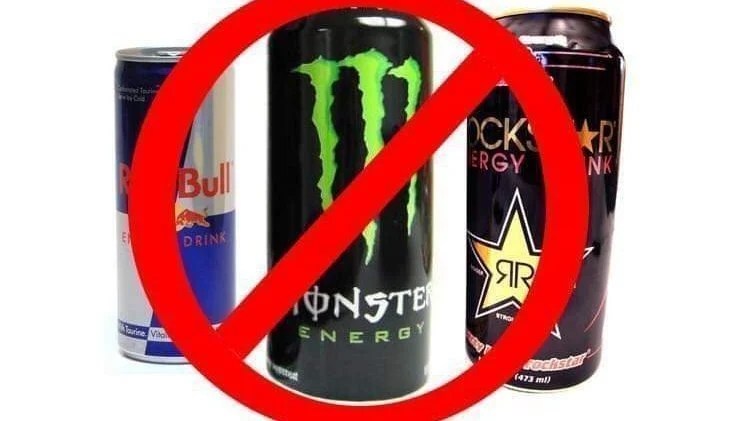
Imagine from change.org. Energy drinks like Red Bull, Monster, and Rockstar are helping contribute to the decreasing health in teens.
By Emma DeSanty ’25
Imagine this; you’re sitting at lunch with your friends and you’re having a conversation when your closest friend tells you how they haven’t been sleeping, they are falling behind on all of their work in school, and they overall just never feel well. In order to make themselves feel better, they have to rely on coffee and energy drinks. What advice would you give them?
Here’s what I would say:
Energy drinks and excessive amounts of caffeine can lead to increased mental and physical health problems. They can even lead to addiction down the road.
The majority of people who consume energy drinks drink them before they work out or before doing some type of exercise because energy drinks supposedly “give you energy” and “boost your energy.” In reality, they cause dehydration (CDC). In many cases, dehydration leads to passing out because there is not enough water in your body. Energy drinks can also lead to heart complications like irregular heart rate and heart failure. Another complication is that energy drinks cause insomnia, which makes it very difficult to sleep (CDC). Excessive amounts of caffeine in teens can cause high blood pressure, mood swings, restlessness, and even seizures because human bodies are not made to consume that much caffeine at one time. Energy drinks also lead to high blood pressure and digestive problems (“The Connection Between Energy Drinks and Addiction in Teens”). What teenager wants that?
Mental health is a big part of the many problems we have in society today and energy drinks definitely aren’t helping it. Due to the excessive amount of caffeine in Energy drinks, they increase stress, anxiety, and depression. Since mental health is such a huge problem teens struggle with in society today, teens should decrease the amount of caffeine and energy drinks they are consuming (Children’s Dentistry and Orthodontist)
You may wonder what energy drinks contain since they are giving your body “quick energy” in order to not feel tired and complete simple, everyday tasks. Energy drinks contain legal substances like guarana, a Brazilian plant, taurine, an amino acid found in brain, heart, and reproductive organ cells, and L- carnitine, a compound involved with metabolism in most mammals, plants, and some bacteria (CDC). Not even mentioning the 100 or more milligrams of caffeine found in most energy drinks. Doctors recommend 100 milligrams of caffeine should be consumed per day, but some doctors even say that caffeine has no room in children and teens diets (CDC)
On top of all those substances, energy drinks also contain more amounts of added sugar than a can of soda. A can of soda usually contains around 11.5 teaspoons of added sugar and most energy drinks contain 13.75 oz of added sugar. A study showed that kids and teens should consume only 6 teaspoons of added sugar per day and 13.75 oz of added sugar is 22.5 teaspoons of added sugar, 16.5 teaspoons more than what should be consumed per day. Some energy drinks try to cover up the amount of added sugar in them so they could say they contain brown sugar, corn syrup, fructose, honey, and sucrose. Added sugars can cause kidney stones, tooth decay, obesity, type 2 diabetes, heart disease, non- alcoholic liver damage, and gout (“The Connection Between Energy Drinks and Addiction in Teens”)
Along with the added sugars and the other substances, one brand of energy drinks is currently in a lawsuit for falsely promoting their “no preservative” drinks, but in reality, they contain citric acid, a type of preservative that is mostly harmless unless mixed with GMO ingredients, then it can become dangerous by causing mold and allergies. (Munce)
In society today, underage drinking and addiction in teens is becoming a bigger problem in society today. Energy drinks and excessive amounts of caffeine are not helping. When energy drinks are mixed with alcohol, the negative consequences increase drastically. When the two are mixed, the likely hood of being a vitim to sexual assault increases (Children’s Dentistry and Orthodontist). When mixed, the contents in energy drinks make it hard for your body to know when intoxicated and increases the risk of alcohol poisoning, which shuts down parts of your brain (Felty). Some studies show that an addiction to energy drinks in adolescence can lead to the addiction of drugs, cigarettes, or alcohol in the future and teens who drink Monsters, or Red Bulls are even more likely to become addicts later on.
Energy drinks can slowly deteriorate some parts in our body and the companies who make these drinks should lower the levels of caffeine and added sugar to reduce the risks of health problems in adolescence, especially when there are healthier ways to get energy. Natural ways to get energy like staying away from junk food, and eating unsaturated fats like nuts, avocados, and seeds. (Felty). Exercising and getting a good night’s rest also help boost your energy so you wouldn’t even need the “energy” that comes from energy drinks. Eating enough carbs and calories also help your body gain energy (Physicians and Surgeons).
Now imagine this; after you tell your friend this advice and they take it, they start doing better, they start getting back on track with their work, and they start becoming more like themselves again.
 The Raider Press