
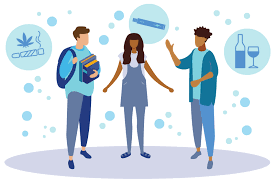
Image from Adobe Stock/David Chrisom: Substance abuse is one of many common topics in teen conversations.
By Savannah Harrold ’25
Think of one of your peers, a friend, or a teen just like you who is undergoing peer pressure or a family history of past substance abuse; they are struggling with their mental health and are not educated about what factors play into being at higher risk. These specific things lead to a higher risk of this teen abusing different types of substances and then getting addicted.
Many different risk factors can make someone more susceptible. You can look out for these things and watch out for being at risk. By knowing the factors it can reduce the risk of teens engaging in using substances.
Substance abuse in teens is rising because they don’t know how to prevent it and can be susceptible. There are different types of risk factors: biological, psychological, and societal. It is said that. “Biological risk factors are more often risk factors for addiction, while psychological risk factors are more often predictors of increased risk for addiction” (Kingsway). But all three can put you at a higher risk of abusing substances and getting addicted. The more you know your biological, environmental, and physical risk factors, the more likely you are to be able to overcome them.
You want to understand how substance abuse develops and examine the risk factors in a community. The risk factors in relationships include “Parents who use drugs and alcohol or suffer from mental illness, child abuse and maltreatment, and inadequate supervision” (SAMHSA). This could also include family rejection of sexual orientation or gender identity, lack of communication and interaction between parents and kids, family conflict, or social influences and familial influence; but then in communities and in society, risk factors can include neighborhood, poverty, a parent’s low socioeconomic status, community laws and norms favorable to substance use, and violence. “In society, risk factors can include norms and laws favorable to substance use, as well as racism and a lack of economic opportunity. Protective factors in this context would include hate crime laws or policies limiting the availability of alcohol” (SAMHSA).
You should try and avoid temptation and peer pressure the best you can while at school, out with friends, or anywhere that you can be susceptible: “Develop healthy friendships and relationships by avoiding friends or family members who pressure you to use substances” (“Tips for Preventing Substance Abuse – Student Affairs”). The Addiction Center says that “Peer pressure stood as a widely acknowledged but scientifically unexplored driving force for certain behaviors.” Most peer pressure is less easy to define, sometimes groups can make subtle signals without saying anything at all, but some pressure may be expressed openly with direct sayings. People may feel pressure to conform so they fit in or are accepted or so they don’t feel awkward or uncomfortable within a group of people. It’s said that “When adolescents believe that their popularity within a peer group increases with the use of substances, they are more likely to participate in such substance use” (“Drug Misuse and Addiction”). You may feel pressure to do something just because others are doing it. Responding to peer pressure is part of human nature, but some people are more likely to give in, while others are able to resist and stand their ground better. Many say, “We become most like those we surround ourselves by,” meaning that if you surround yourself with people who abuse drugs and alcohol, you are then more likely to as well.
If you are struggling with mental illness, you should seek help if you need it. Studies show that People who have been diagnosed with PTSD or other mental illnesses are more at risk for substance abuse (“Drug Misuse and Addiction”). They also found that people with a mental disorder, such as anxiety or depression, may use drugs or alcohol as a form of self-medication. Some drugs temporarily fix the problem but, over time, make the symptoms worse or even bring up new problems you’ve never had before. Occurring substance abuse problems and mental health issues are more common than many people may realize. About 50% of individuals with severe mental disorders are affected by substance abuse, and out of all people diagnosed as mentally ill, 29% abuse alcohol or drugs.
If this teen, that I talked about in the beginning, had known and been aware of how at risk they were in the future, substance abuse can be prevented from ever happening. They would know what things in their life that put them at higher risk. Drugs change the brain and can lead to addiction and other serious problems. So, doing what you can to prevent early use of drugs or alcohol may go a long way in reducing these risks. As a community, people can address the factors in a community that increases the risk for substance use and promote factors that minimize the risk of substance use. There should be resources at school for students to access so they are able to learn about the factors, or it should be taught about it in schools. Parents and guardians should be talking to their children about it if nothing is being done at school. If no one is doing it for you, educate yourself.
If this doesn’t get solved, teens all over the world will continue to abuse substances because they don’t know how to prevent it. They can learn if they are increasingly more at risk. There are so many consequences for substance abuse, like declining grades, arrest adjudication or being arrested, an intervention, increased potential for dropping out of school and recovering from a substance use disorder that requires retraining the brain. You have to learn ways to deal with triggers, learn about negative peers, learn about relapse, and learn coping skills if you’re trying to recover from substance abuse. Adolescent substance abuse is something that needs to be prioritized by everyone. We all have to work together and solve this problem.
 The Raider Press