
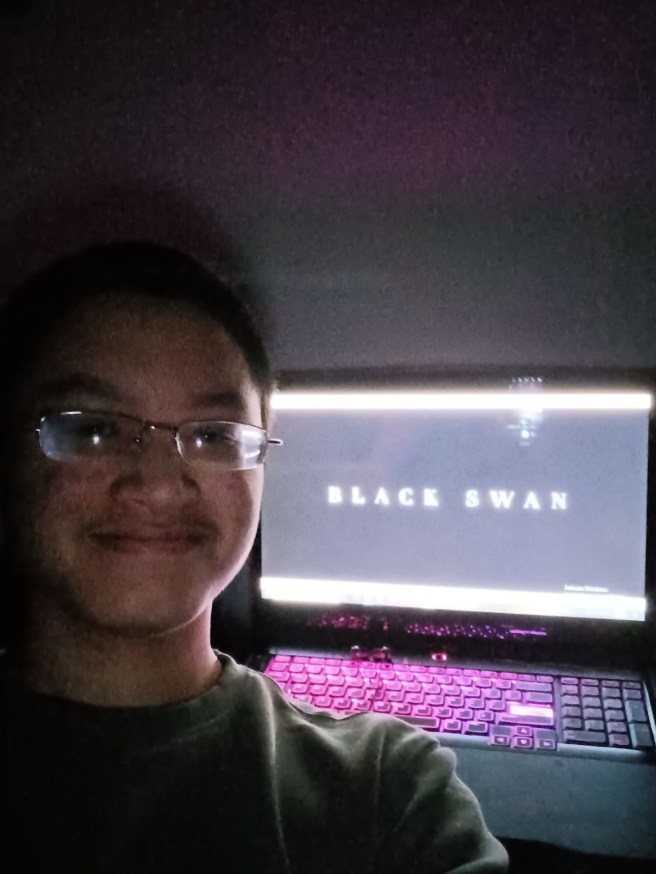
By Vincent Trinh ’25
Days after watching Black Swan, there has been one scene that has lingered in my mind ever since. Towards the middle of the second act the protagonist, Nina, begins to hallucinate that she has a cut on her finger, but it mysteriously disappears when she rips off the loose skin. Throughout the movie, she has been ignoring similar phenomena to focus on her ambitious performance of the ballet Swan Lake. However, the second act gives a morbidly satisfying storytelling payoff in the form of Nina’s revelation that her sole focus on her ambition has grave consequences. Nina’s hallucinations become more marring and real. Her ignorance has finally caught up with her, leading to what some may consider the starting point of her spiral into madness. This, to me, is what makes Black Swan such a captivating experience. The viewer is shown a voyeuristic perspective of Nina’s psyche in a way that leaves you with more questions than answers. This morbid curiosity stays until the end credits and led me to write this review.
Black Swan falls under the genres of drama, thriller, and psychological horror. The film was first released in 2010 in theaters. Directed by Darren Aronofsky, it became one of his highly decorated works. Aronofsky has directed classics such as Requiem for a Dream and Evil Knievel. After Black Swan he would go on to also direct Noah (2014), Mother! (2017), and Whale (2022). Black Swan has a decent runtime of 1h and 48m to flesh out its caricaturistic characters. The film follows Nina Sayers, an ambitious and aspiring ballet dancer, and her descent into madness as she is pushed past her limits by her extreme dance director. All the while, Nina fights for the spotlight as an opposing rival dancer catches her eye. Nina begins to lose her grasp on reality and spirals into a waking nightmare.
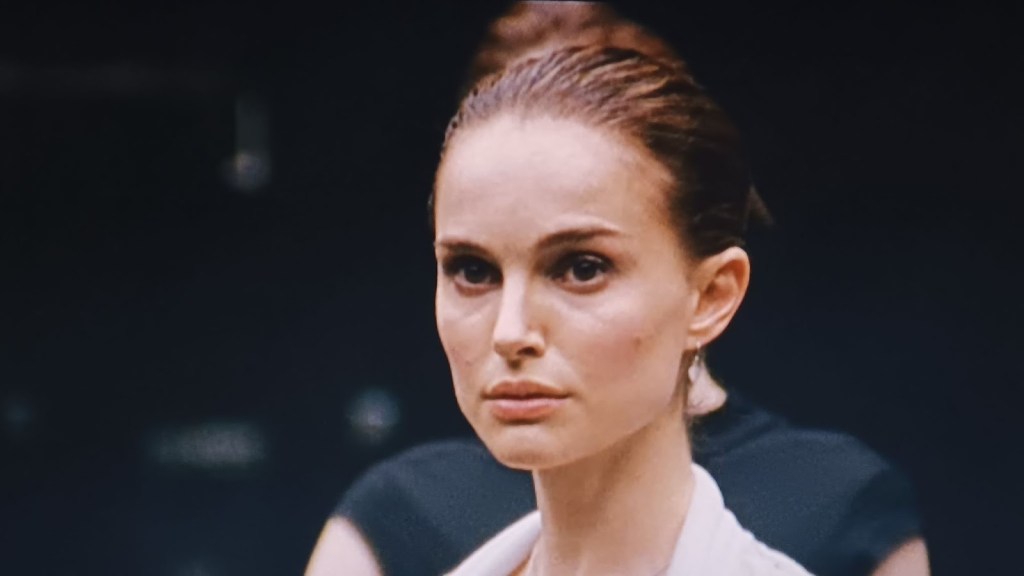
Nina Sayers is played by Natalie Portman, notably famous for her role in the Star Wars prequels as Padme, while Nina’s artistic director and uncompromising rival are played by Vincent Cassell and Mila Kunis, respectively. Smaller characters such as Beth, the previous performer to take up Nina’s desired role, and Nina’s mother are played by Winona Ryder and Barbara Hershey.
When watching Black Swan, I found its overall plot structure and themes discussed to be almost identical to Perfect Blue, an R-rated anime film. Instead of a ballet dancer, Perfect Blue follows an even more enigmatic paranormal haunting of a retired J-pop singer. Black Swan’s use of the obsessed artist trope is also comparable to the same experience of Andrew Niemann in 2014’s Whiplash. However, Niemann’s antagonistic force is more present in the form of his mentor, Fletcher. One of the more obscure similarities between this film and another is in the widely known masculine gem that is Fight Club. Both movies have their protagonists tackle themes of corruption and dual personality disorders. Nevertheless, no matter how many connections can be made, I can say with certainty that Black Swan is unique and shines with an unparalleled melodramatic feel.
The tone of the movie was consistently unsettling and suspenseful. While watching this movie, I had forgotten to blink my eyes as they were permanently fixated on the screen watching the film’s transformative nature unfold. I was glued to my seat with bated breath as occasionally a chill ran down my spine with each surreal moment. I cheered for Nina’s success and shared her flow of tears throughout the movie.
The film’s production didn’t just accompany the film’s story, but amplified it. The sound design provided haunting musical motifs and striking sound effects to already harrowing scenes. Throughout my viewing experience, my ears were alienated by out-of-this-world sound effects that existed in their own realm of malevolence. This was done in tandem with the effective use of visual effects to elevate the plot to seemingly supernatural levels. They all work together to create a visually, audibly, and thematically unnerving viewing experience.
Unfortunately, I do not know much about ballet or even dance. Yet, even I can acknowledge that there is genuine choreography at play here. As a common dance-peasant, I can say that it is expressive and absolutely beautiful. Truly, I believe that this film’s choreographer has captured the essence of ballet.
All of this is framed by the expert camerawork. When watching the movie, I couldn’t help but tell myself, “The camera must be working for the Black Swan,” the Black Swan that has been dragging Nina down her spiral of madness. The camera is used effectively for this in the opening scene: it frames Nina’s face as it is instilled with dread from the arrival of the Black Swan. For the rest of the movie, the camera is used to feed into our voyeurism of Nina’s psyche as it shines a metaphorical light on the emotions of Nina and the other characters. One only needs to look to the strange behavior of this outside entity for evidence. The camera is neutrally idle unless the drama emerges or something surprising happens. Thus, the camera adds a shock factor and surrealistic aura to Black Swan’s macabre.
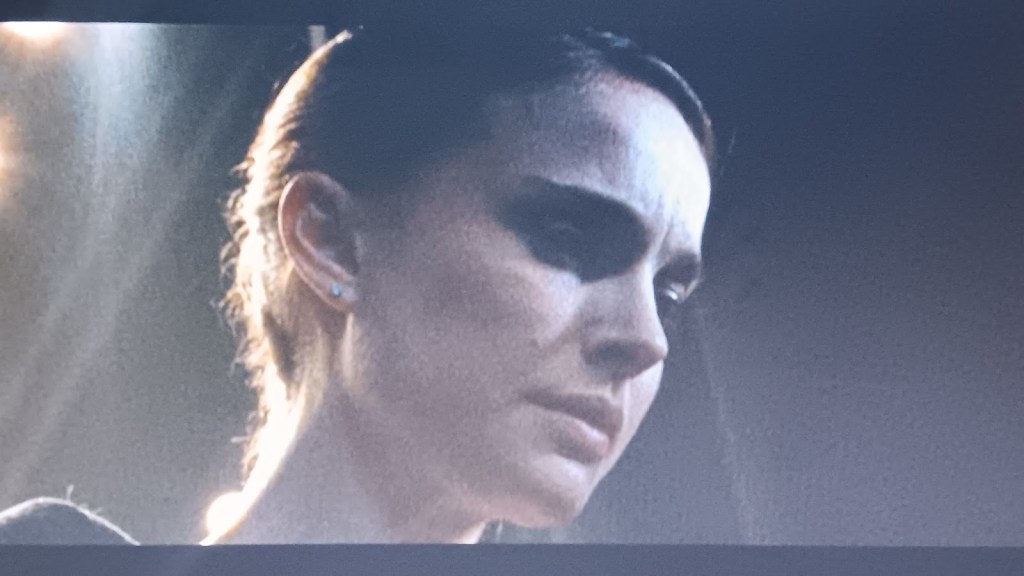
Portman’s immersive, gripping performance of Nina Sayers led me to both sympathize with and fear her. At first, the viewer can’t help but sympathize with Nina and her innocence which is wrapped with warm smiles. Portman’s voice for Nina is gentle, soothing, and playful… until Nina undergoes her transformation. Portman is able to shift gears into a more bitter and conflicted Nina. This Nina holds a cold, ill-tempered tongue that spits poison with every word. The smooth transition between the two is a testament to how Portman earned her nomination for an Oscar for her performance in Black Swan as Nina. Yet, the consistency of both sides of Nina having the same longing is nothing short of masterful acting. Portman was able to capture Nina’s desire for perfection.
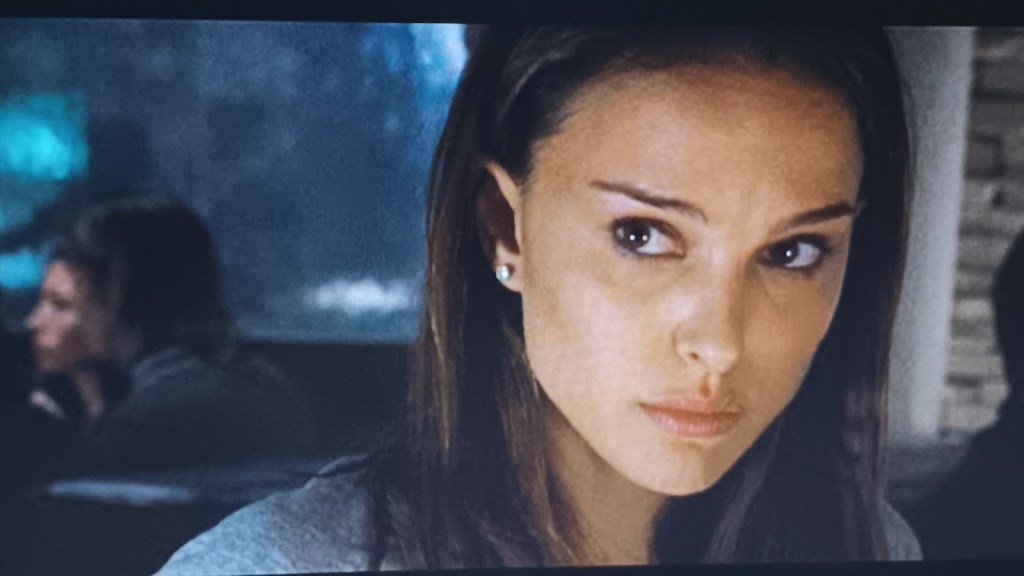
Even though I thoroughly enjoyed Black Swan, I cannot say it was flawless. There is one scene in particular that comes to mind: the ending. The ending of Black Swan is, to put it lightly, anticlimactic. Just as Nina has been completely corrupted by the mysterious Black Swan, we are presented with one last scene. Nina takes back control of her body only for a brief moment and proceeds to perform a previous scene that we had been introduced to towards the latter half of Act 2. Now, the tension is almost palpable and the score is swelling to its crescendo. I was at the edge of my seat holding my breath with each graceful leap Nina took, knowing full well that the tragedy would finally come to an end, knowing that in the aforementioned scene, we had learned that Nina’s character commits suicide in the story. At last, the moment that the movie has been building up all this time has finally arrived. Nina takes Odette’s final leap… but while I was expecting Nina to fall to her tragic and sudden death, she didn’t! Instead, Nina fell slowly onto a white mattress with a heavy emphasis on her grace and gentleness. Her face was almost tranquil as she smiled back at the camera. This scene left me confused and slightly frustrated. They had robbed us of our emotions and our expectations! Even though I fully understand how this fits with the overall themes of the movie, I cannot deny how painfully anticlimactic it was. All of the gripping suspense, tension, and drama had, in my opinion, been thrown away for an underwhelming conclusion.
One of my favorite parts of the movie is when Nina is rehearsing just hours after a sexual encounter with Lily, her rival, during the night prior. Nina decides to ask Lily about that night as she stands with her waiting to be cued in. Lily denies the encounter, even going to say that she was never with Nina that night. Lily laughs and jokes about it with a wide, amused smile. She adds a humorous remark saying, “Did you have a lezzy wet dream about me?” leaving Nina on a thread as she is rushed onto the stage. This moment in the movie is crucial to Nina’s character development and the psychosexual themes that it has been whispering, yet it is fleeting. Some movies leave the most plot-heavy moments to be short and sweet. This scene is no different. Everything about this scene contains a supernatural element to it which leaves the viewer in the same position Nina is in. Who, or what, was with Nina that night? Was there a reason for the lesbianism displayed? Was it all in Nina’s head? The movie gives many breadcrumbs to follow, all while retaining themes like femininity, purity, corruption, and the pursuit of perfection. Yet, by the time the credits roll, all of these pieces click together satisfyingly.
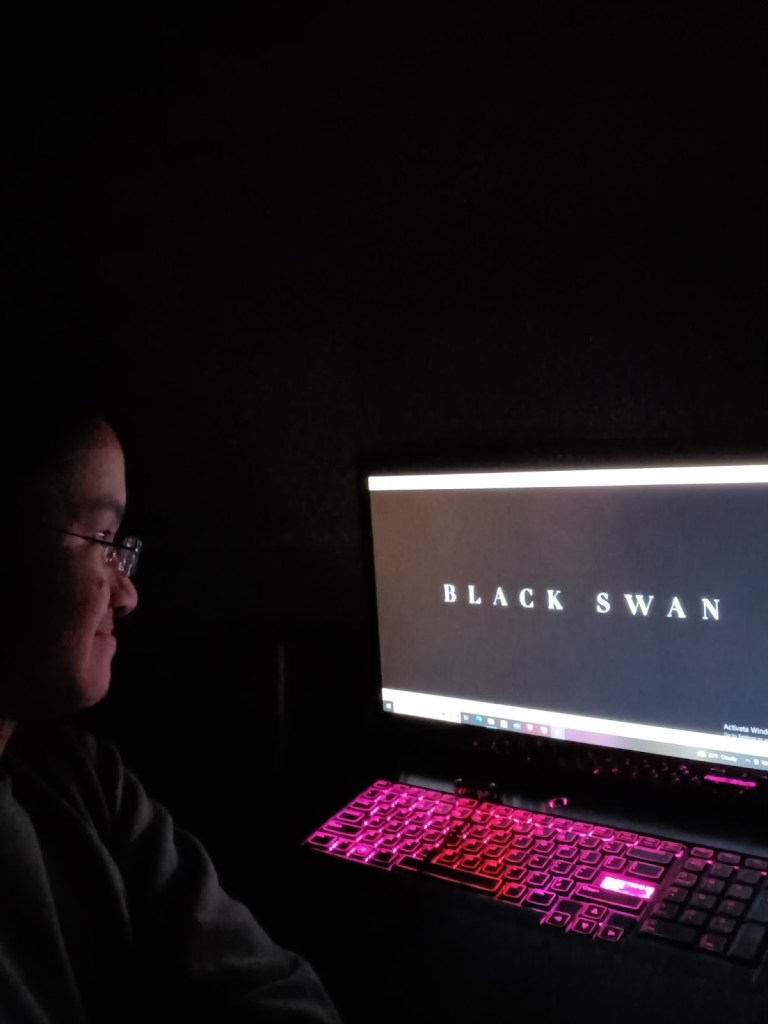
This is not a movie for everyone; anyone could see that. It falls into a niche category of sophisticated tragedy and drama that some people find boring or stupid. While I myself could be found guilty of making similar judgments, I found something unique in this movie. Black Swan carries a spark of cinematic brilliance that I cannot put into words. Its themes and characters come together to form a beautifully crafted painting. Just as a painting may be considered overrated, I implore you to give this film a chance. Deeper meanings and greater understandings are buried within the aristocratic facade of sophistication and grandeur.
I would recommend Black Swan to theater fans, drama fans, and overachievers. The cinematic yet theatric consistency of Black Swan feels like a mix of Hamilton and Pulp Fiction. The film blends both worlds subtly into each frame, creating a rich atmosphere. While drama fans will be glad to hear that the drama is dramatic, as always… I’m just joking. The drama deeply explores the lives of these characters in a way that keeps Nina, our Freudian star, in the center of it all. Last but not least, I cannot stress enough that everyone should give this movie a chance. Although you may be quite depressed after watching it, keep an open mind. Once we understand the acuity of Nina’s caricature, only then can we unlock the true meaning of Black Swan. And once you get through all of that, you too will see that this movie is nearly perfect.
A friend of mine, Gianna Akter ‘25, suggested that I create a playlist with songs that reflected the movie’s tone and overall feel, so I did! Here’s the link: https://www.youtube.com/playlist?list=PL7oBKg0D4qrFBY9pIzsY5idjKD9jjScC-
 The Raider Press