
By Nikolas Kotucek ’26
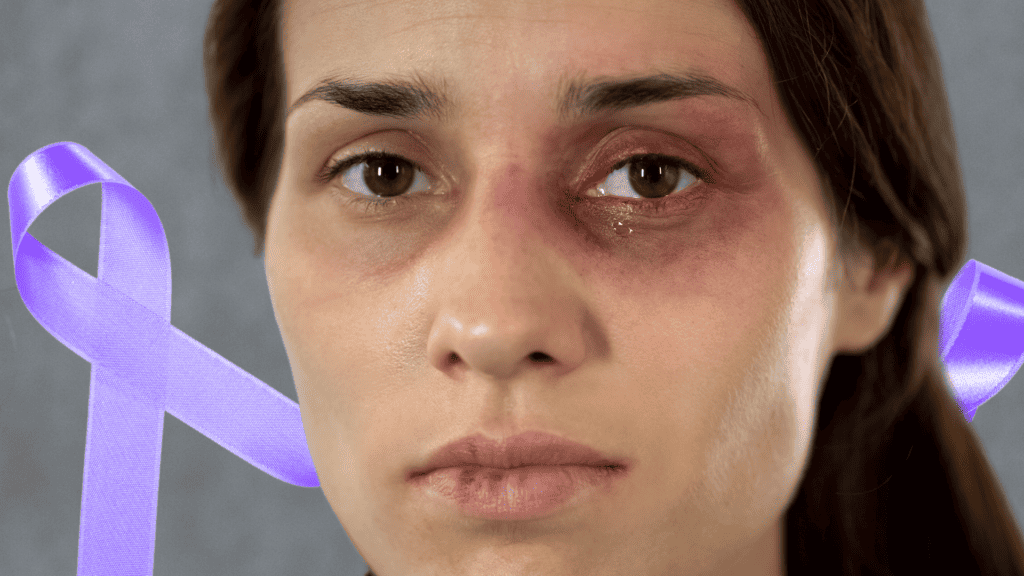
Abusive situations stem from more than just physical violence. Domestic violence is a way to gain power over another partner to be in control. A lot of innocent people face abusive situations in relationships; “Domestic violence is a pattern of abusive behavior in any relationship that is used by one partner to gain or maintain power and control over another intimate partner. Domestic violence can be physical, sexual, emotional, economic, psychological, or technological actions or threats of actions or other patterns of coercive behavior that influence another person within an intimate partner relationship.” (U.S. Department of Justice)
A large amount of population who have or had an intimate partner are experiencing some sort of domestic violence, and it affects anyone no matter what their age, gender, or ethnicity: “41% of women and 26% of men experience some sort of violence with an intimate partner” (CDC). Almost half the population of our women in the U.S. and a quarter of our men. That is way more people than it should be. Further, “Over 61 million women and 53 million men experienced psychological aggression with an intimate partner in their lifetime” (CDC). This puts in perspective that it is pretty even, and a lot of our population has experienced some sort of domestic abuse. Realistically that is almost ⅓ of our population. As for rape, “9% of women and 0.5% of men” have been affected (American Psychiatric Association) That is a large amount even if it is a single digit number; a great number of our women are experiencing sex unconsensually which makes that single digit seem even larger.
As a society, we have to provide more support for people who could be experiencing this. Whether it means to have check-ins with someone because they are acting strange or just having a normal check in with them. A lot of times, domestic violence stems from something going on in the aggressor’s life. It would be good to teach kids early on that it isn’t okay to do that, but also we need to make a safe environment for the kids so they never become violent with their intimate partner. We need to create support groups and more safe spaces to receive help when in a situation like domestic violence. For example, these numbers are help hotlines to call when you are in a some sort of abusive relationship: 1-877-863-6338 (Voice) 1-877-863-6339 (Illinois Department of Human Services).
In the future, if we can continue to improve on domestic violence it will allow people to be less cautious when it comes to finding relationships. You won’t have to worry about meeting such a horrible person as much, and you yourself will not have to worry about being a terrible partner.
Domestic violence is serious. It is something that cannot be taken lightly and action needs to be taken upon it. Help friends when they talk about their relationship and it doesn’t sound healthy. Help yourself if you are in a situation where you don’t feel safe with your partner or feel like you are being controlled. You also have to make sure that you are not an aggressor in any sort of way at all. Acknowledge “your own feelings: Are you afraid of your partner? If you are afraid to speak freely or say no to sex, this could be an important warning sign that something is going on in the relationship that should be addressed” (Columbia University Department of Psychiatry). It is good to educate people about domestic violence, too. “Domestic abuse is typically manifested as a pattern of abusive behavior toward an intimate partner in a dating or family relationship, where the abuser exerts power and control over the victim” (United Nations). A lot of people don’t realize the reasoning for it, they just a lot of times think the abuser is just trying to be a bad person, but that is not what it is at all in reality. So we need to realize a lot of times the abuser is just someone who is hurt or not in the right mental space and needs help too.
Works Cited
“Domestic Violence: A Q & A With Trauma Researcher Maja Bergman.” Columbia University Department of Psychiatry, 24 October 2023, https://www.columbiapsychiatry.org/news/domestic-violence-q-trauma-researcher-maja-bergman. Accessed 9 May 2024.
“Fast Facts: Preventing Intimate Partner Violence |Violence Prevention|Injury Center|CDC.” Centers for Disease Control and Prevention, 11 October 2022, https://www.cdc.gov/violenceprevention/intimatepartnerviolence/fastfact.html. Accessed 9 May 2024.
“IDHS: Violence & Abuse Prevention.” http://www.dhs.state.il.us, https://www.dhs.state.il.us/page.aspx?item=30327. Accessed 9 May 2024.
“Office on Violence Against Women (OVW) | Domestic Violence.” Department of Justice, 6 December 2023, https://www.justice.gov/ovw/domestic-violence. Accessed 9 May 2024.
“Psychiatry.org – Domestic Violence.” American Psychiatric Association, https://www.psychiatry.org/patients-families/domestic-violence. Accessed 9 May 2024.
“What Is Domestic Abuse? | United Nations.” the United Nations, https://www.un.org/en/coronavirus/what-is-domestic-abuse. Accessed 9 May 2024.
 The Raider Press