
By Brooklyn Fernandez ’26
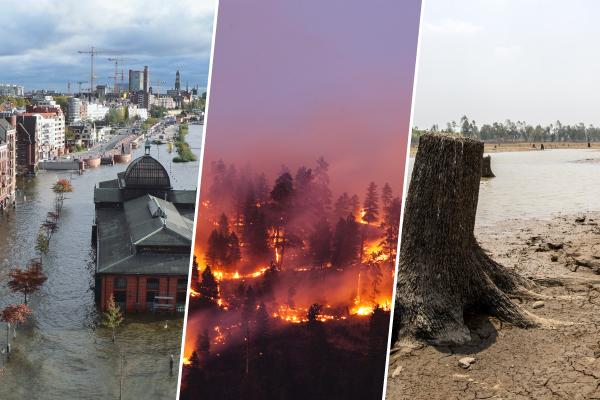
Is it too late for our generation to help slow global warming and climate change? For future generations to live and survive on Earth, people must stop ignoring the many signs of global warming. Climate change is a serious problem (Redahan). When people and colleges think of climate change, they consider it “a ‘wicked problem’ that is hyper-complex, lacks clear solutions, and affects multiple communities in different ways” making it seem that “universities are unlikely to achieve consensus around a single approach to sustainability” (Stein). Some may connect a person’s experience with their emotions. A human’s experience of fear makes it difficult to connect emotions to climate change (Mertens). Though Earth is showing signs of global warming and climate change, people ignore the signs as they do not think it is a problem and has little importance because with how slow the changes occur, some people do not believe it will affect them during their lifetime and think there are bigger issues to worry about.
There is a significant importance in addressing global warming and climate change now. Unfortunately, people’s “immediate concerns will always trump eventual concerns” (Kluger). People won’t change unless they are forced to (Kluger). Most people know about climate change but do not know how strongly it affects us. “A majority of Americans, 58%, understand that most scientists think global warming is happening. However, only one in five, 20%, understand how strong the level of consensus among scientists is” (Leiserowitz). “If we think the consequences are far in the future, we tend to discount the risk. People just aren’t going to inconvenience themselves unless they’re forced to” (Kluger). This shows that people will not change unless they are compelled to and may not know how climate change could affect them or how it will change things in the future.
When everyone does their part, we can help slow global warming and climate change. “More than half of Americans think one person’s actions will help change global warming” (Leiserowitz). If one person can create change, imagine what the world could do by working together. In the end, “taking responsibility for Earth’s pollution rests with its residents who have the power to address it” (Gonsalves). By working together, the possibilities are endless. We have the capabilities to slow global warming and climate change.
If people believe they cannot help and do nothing, then nothing can change. Some may think moving to a new place will get them away from climate change, but it will not (Leiserowitz). When something is hard for a person to picture, it is easy for them to ignore (Kluger). We are currently “living through a climate disaster” (Mertens). Many things are affected by rising temperatures, but if everyone pitched in and did their part, then change can occur.
With help from people in their communities, action can be taken. “Encouraging ‘nudge’
behavior – softly encouraging a certain type of behavior without restricting choice” (Redahan), can allow a person to see that they can choose to lend a helping hand without feeling forced or limited. People can believe things and fool themselves by thinking climate change is not as serious as it is. They may believe that climate change is not the biggest threat to Earth right now and do not need to do anything. On the other hand, some people believe climate change is an important topic and should be discussed by our government (Pasquini). It is possible that more people would be open to hearing about climate change if it was being talked about by scientists instead of the media (Pasquini). However, not absorbing every bad piece of news about it, and taking steps to ease our own fears, including sharing those fears with others, are also important (Mertens).
In closing, if we do not participate in changing what we do to help our climate change now, then things will continue as they are and keep getting worse. People need to stop ignoring the signs of global warming and climate change just because they think it will not affect them during their lifetime and believe there are bigger issues in the world to worry about. It is not too late to do something to help make tomorrow better and for future generations. Change will not happen overnight, but by working together we can slow global warming and climate change and ensure that Earth is protected. Thank you for reading this article, and I hope it influences you to make a change.
Works Cited
Gonsalves, Esther. “Why the World Continues to Ignore Climate Change.” Acuity Knowledge Partner. 31 January 2024. https://www.acuitykp.com/blog/why-the-world-continues-to-ignore-climate-change/ Accessed 1 May 2024.
Kluger, Jeffrey. “Why We Keep Ignoring the Most Dire Climate Change Warnings.” Time. 8 October 2018. https://time.com/5418690/why-ignore-climate-change-warnings-un-report/ Accessed 30 April 2024.
Leiserowitz, Anthony. “Climate Change in the American Mind: Beliefs & Attitudes, Spring 2023” 8 June 2023. https://climatecommunication.yale.edu/publications/climate-change-in-the-american-mind-beliefs-attitudes-spring-2023/toc/2/ Accessed 1 May 2024.
Mertens, Maggie. “Why Aren’t We More Scared of the Climate Crisis? It’s Complicated.” The Guardian. 22 July 2023. https://www.theguardian.com/environment/2023/jul/22/climate-crisis-fear-psychology Accessed 24 April 2024.
Pasquini, Giancarlo, Ailson Spencer, Alec Tyson and Cary Funk. “Why Some Americans Do Not See Urgency on Climate Change.” Pew Research Center. https://www.pewresearch.org/science/2023/08/09/why-some-americans-do-not-see-urgency-on-climate-change/ Accessed 24 April 2024.
Redahan, Eoin. “Why Are We Ignoring Climate Change?” SCI. 2 March 2022. https://www.soci.org/blog/2022/3/why-are-we-ignoring-climate-change Accessed 24 April 2024.
Stein, Sharon. “Universities Confronting Climate Change: Beyond Sustainable Development and Solutionism.” https://www.researchgate.net/publication/368160122_Universities_confronting_climate_change_beyond_sustainable_development_and_solutionism Accessed 1 May 2024.
 The Raider Press