
By Jaylynn Donaldson ’25
November is known for Election Day, Veterans Day, and the main holiday many look forward to: Thanksgiving. Many do not realize, however, that November is associated with Movember, a movement aimed at raising awareness about men’s mental health issues. It is not a surprise that people do not know this as men’s mental health is often overlooked when in reality it needs more attention.
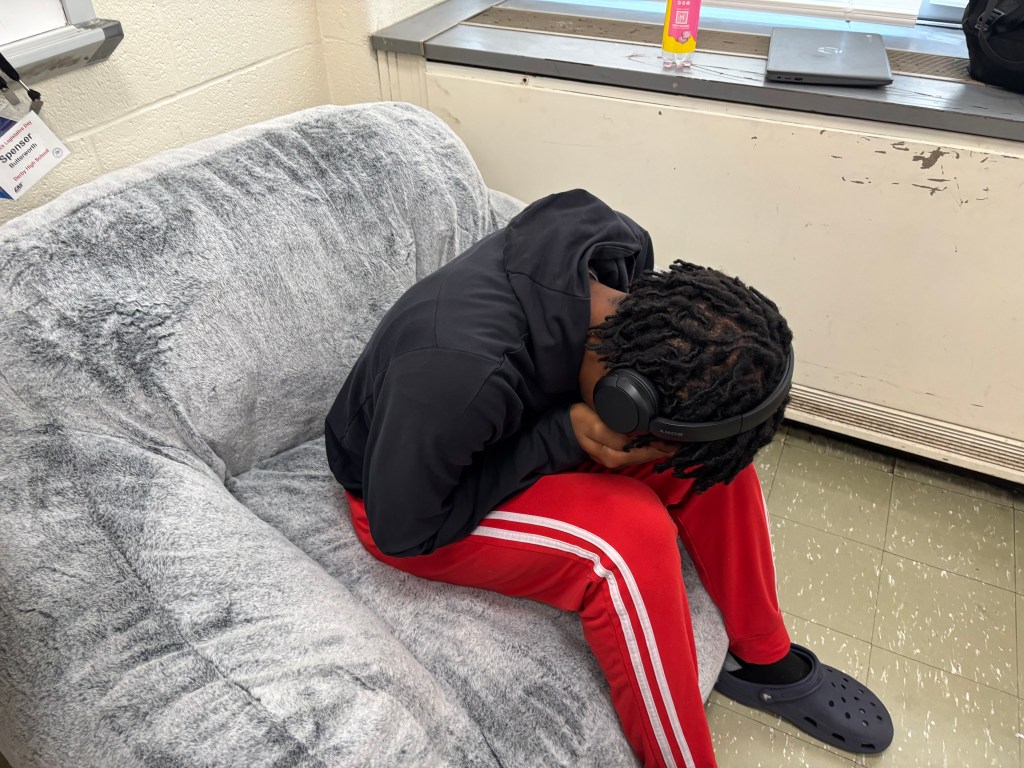
“Boys don’t cry” is a phrase many men hear at a young age. This phrase, created by society and often used by parents or peers to scold young boys who show too many emotions, leads many boys to neglect their feelings. According to the Newport Institute, a mental health treatment center, “The Anxiety & Depression Association of America (ADAA) estimates that 1 in every 10 men struggles with anxiety and/or depression. However, men don’t tend to talk openly about their emotional struggles, such as feeling sad, worthless, anxious, or hopeless.”Fostering that mentality of “Boys don’t cry” at a young age creates an unhealthy idea that a man is strong and unemotional and as they grow older that mentality evolves into “Men can’t cry.” Many men struggle with mental health issues and just the feeling of not being okay, but do not reach out and receive proper help due to being seen as weak and less of a man for doing so.
Men’s suicide awareness organization Headsupguys reports that “In the United States, the suicide rate among males is 4 times higher than that of females. Male deaths represent 79% of suicides, amounting to roughly 100 men dying by suicide every day, over 36,000 annually”. Many men who are struggling mentally sometimes die by suicide by using firearms or hanging themselves. The lack of emotional support during a man’s childhood contributes to them not knowing how to express and control their emotions, which results in men not knowing how to process or express their feelings. Without proper guidance and healthy coping mechanisms, their emotions manifest in harmful ways like self-harm, drug addiction, erratic behavior, or, tragically, suicide. Men not understanding their emotions cause them to not only harm themselves but others around them as well, impacting their relationships, families, and communities.
We can prevent these issues in many ways, starting in the home at a young age. Fathers should explain to their sons that it is okay to be emotional instead of shaming them for it! Boys should grow up in an environment where they feel safe expressing their emotions. Men struggling now should know that it is okay to not be okay. Creating spaces where they learn emotional intelligence, opening up conversations, and breaking harmful stereotypes are all steps to take to ensure that men receive the proper help they need.
Men’s mental health is an issue that should be taken more seriously and not as a joke. As a society instead of using harmful phrases like “Boys don’t cry” and “Men can’t cry” we should use “Boys can cry” and “Men should cry” to uplift men and let them know that being emotional does not make them less of a man, but more of a man. A society where men’s mental health is taken seriously benefits everyone, as men are less likely to commit suicide, harm themselves or others, and become emotionally available. Putting a spotlight on men’s mental health will benefit society as a whole.
 The Raider Press