
By Vincent Trinh ’25
WARNING: THIS ARTICLE CONTAINS SPOILERS FOR DEAR EVAN HANSEN, READ AT YOUR OWN PERIL!
On paper, Dear Evan Hansen is a modern depiction of the teen experience that explores heavy themes such as suicide, abandonment, and depression. Its capacity to inspire and self-reflect craft its unique identity. However, some may find its ending unsatisfying and its characters uninteresting.
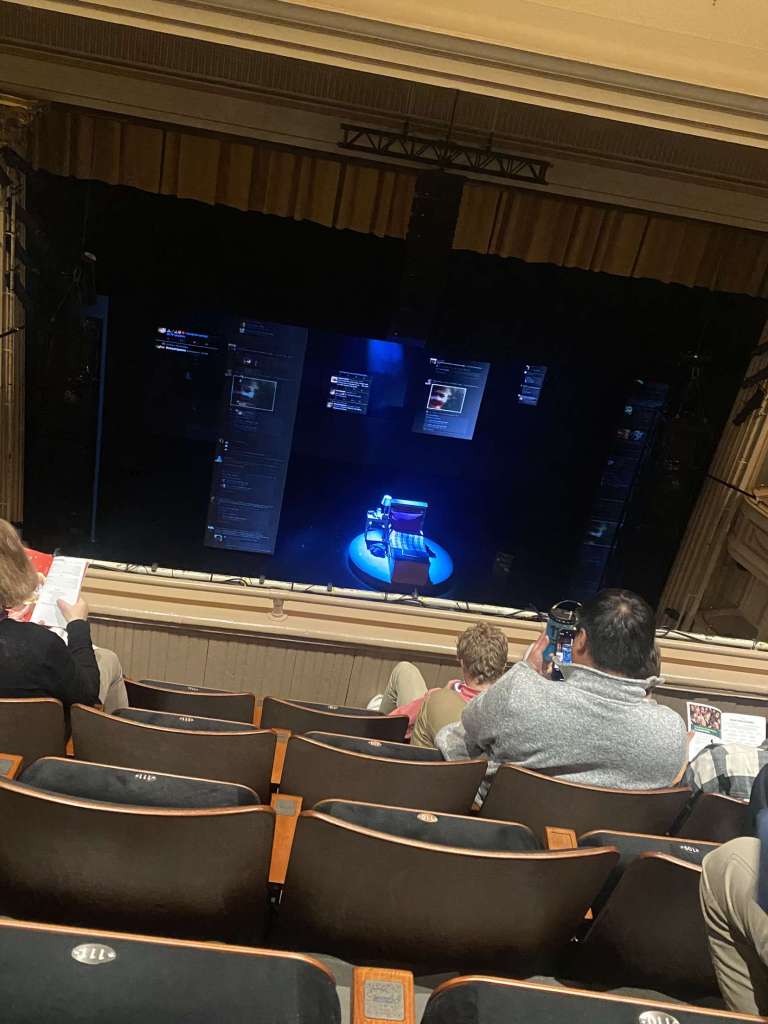
Dear Evan Hansen is a drama and musical play that details the obscure and sometimes tragic circumstances of a teenager’s life. The Shubert theater describes, “After writing a letter to himself that was never meant to be seen, Evan becomes entangled in a lie that was never meant to be told and a life he never dreamt could be his. As a result, Evan finally gets what so many of us are searching for—the chance to finally fit in.” First shown Dec. 2016 at the Arena Stage in Washington DC, Dear Evan Hansen was a Broadway hit until its removal in 2022. Still, the play stands out with its multiple accolades. The music for the play was written by small team Benj Pasek and Justin Paul– most well-known for their work in The Greatest Showman. The book, which the play is based on, is written by Tony Award winner Steven Levenson. You can view the show Nov 22-24 2024 at the Shubert Theater in New Haven, CT. It has a runtime of roughly 141 minutes or 2 hours and 21 mins.
I found Dear Evan Hansen to be a combination of some of my two favorite films: La La Land and 500 Days of Summer. A unique trick that La La Land uses as a musical is finding magic in the mundane. I adore its ability to lull you into a mundane situation and suddenly spring forth into song. While some might argue that this is a core principle of musicals, the effects are more potent in film. Dear Evan Hansen showcases the trait similarly with its imaginative production and on-point Broadway acting. Some of the most iconic songs occur during everyday events. As Dear Evan Hansen embodies one aspect of La La Land, it shares multiple parts of 500 Days of Summer. 500 Days of Summer is a teen romance comedy/drama that follows a modern romance between two mundane coworkers.
Despite its simplicity, Dear Evan Hansen evokes heart-wrenching emotions and tantalizing drama. Along with this, the play can capture the true essence of a modern teen movie like lightning in a bottle. The amount of jokes and story beats that resembled my own experiences was surprising and most welcome. There is nothing more warm and inviting than a piece of media that just “gets you.” It gives off the feeling of being from the diary of a real teenager. Evan, himself, is awkward and dare I say relatable. His personality quirks are endearing and make him a personable character. Evan is the kind of guy you could sit with on the phone for hours on end, talking about absolutely nothing. He would discuss the most mundane, niche, and TMI things and you could just vibe with it. However, the world that Evan lives in is indifferent and apathetic to him. Hence, Evan’s character is mostly shown as antisocial and insecure. While I can respect proper representation and characterization, it would seem that Dear Evan Hansen’s characters all fall into an archetype. Evan is the “antisocial and awkward character” for the whole play. I can sympathize with the protagonist, but as a character, he can fall short. There is something about using archetypal traits to create “real people” that rubs me the wrong way. I want to believe that Evan is a real person that I have come to know. Yet, the stereotypical parts of him veer my perception to be more artificial. I would tell myself that Evan is an awkward character and move on to the next story beat. Overall, I loved the characters of Dear Evan Hansen, but I can’t help losing immersion in slightly archetypal writing.
Disregarding my pessimism, there is a redeeming factor. The writing itself.
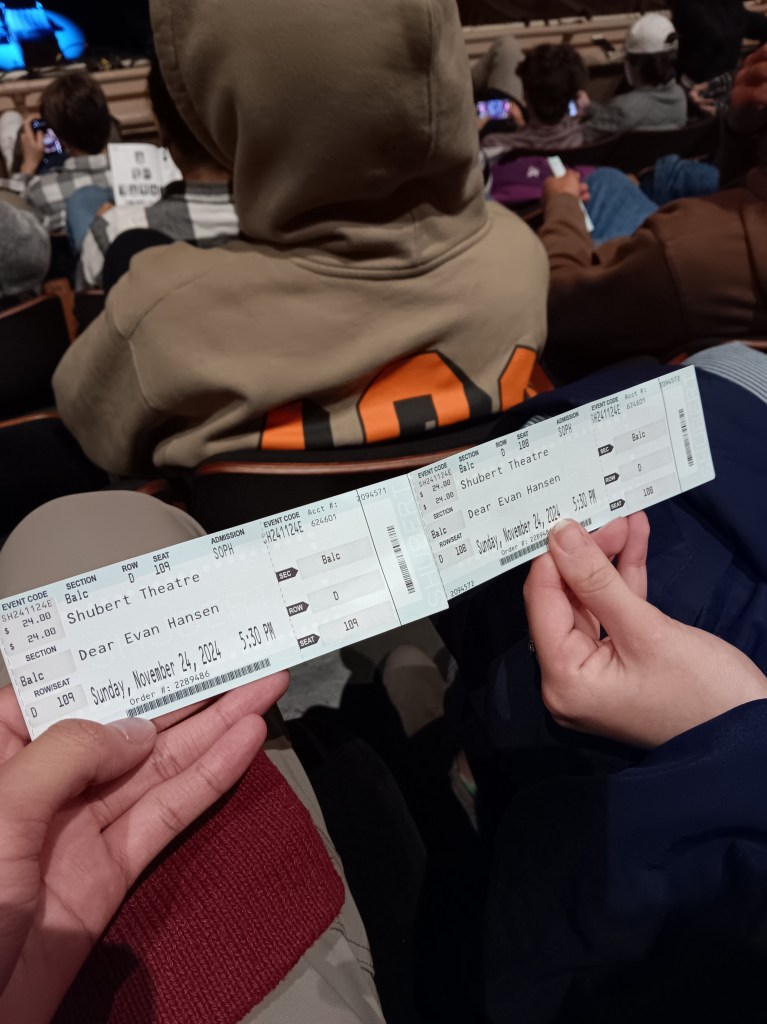
Not too far into the runtime, around 20 minutes in, the character Connor Murphy (played by Alex Pharo) is announced to have committed suicide off-screen. I already knew it was coming. You see, I watched the film adaptation a few years before seeing the show and never forgot this exact scene. I looked to my friend seated to the right of me, she was speechless. The gravity of the sudden shift in mood from comical and satirical to somber took everyone off guard. All of a sudden, the show held all of us in its “ah-ha moment.” I could almost hear it laughing at us for laughing at all of the awkward silences and ridiculous characterization. Just moments ago, the audience was poking fun at how Connor was a typical high school bully. No one was laughing anymore. The show was bold enough to kill off a character just like that, opening the discussion of morbid and disturbing topics like suicide. Of course, we were allowed more comedic moments after a little while. Yet, the effects of that scene never subsided. Keeping the discussion of serious topics made for a hard-hitting meaningful story. In fact, the show’s attempts at balancing the two sides is another one of its strengths.
Every part of Dear Evan Hansen is appealing to the “modern teen experience.” Most characters regularly use smartphones and mention 21st-century things like Google or social media. Social media is a driving point of Dear Evan Hansen’s story. An essential part of this mold is the humor. Dear Evan Hansen wears its satire on its sleeve as a badge of authenticity to the “teenager vibe” cake. Through its humor, it shows how it understands how teenagers can adopt apathetic, sarcastic, and even cynical jokes in their modernist humor. Mockery, banter, and even insults can be taken as casual and conversational. This show understands that, making for punchlines that know how to land. Whilst, on the other side of the scale is the emotional and serious scenes that make up the core plot of the play.
The serious moments are supported by personal, emotional stories embodied by the characters themselves, like how Evan’s mom is characterized by her depressing experience with the leaving of Evan’s father. Connor’s family is dysfunctional and broken to the effect that their serious moments reveal their inner contemplations. Evan, himself, showcases many personality flaws that catch up to him when his walls fall down. The show effectively pulls the curtain on all character’s personalities. It doesn’t shy away from the idea that everyone is broken inside. We are all hiding something from the people we love. Whether it’s the depression of a single mother, the guilt of an ashamed father, or the suicidal thoughts of a teenager, Dear Evan Hansen lays it all on the table. This makes for moments of vulnerability that symbolize real people.
One of my favorite characters is Zoey Murphy (played by Hatty Ryan King). Zoey is the sister of the late Connor Murphy. She has always sought the approval of her older brother but has only been bitterly pushed away her whole life. Now that her brother is dead, she is conflicted about handling the grief of someone who mistreated her. King was able to portray this inner conflict with depth and nuance. An example of this is the scene where Zoey is speaking with Evan about how he knew her brother. Evan tells Zoey about how much Connor talked about her. King produces tears to great effect and with a trembling voice tells Evan to continue. Now that Zoey has discovered how much her brother truly loved her, she gradually succumbs to tears. Knowing that he still cared for her even after pushing her away evoked complicated feelings of shock, relief, and regret. Zoey regrets how she judged and treated her brother, thinking he had nothing but hate for her. King evokes this with a never-ending outpour of tears as her character slowly succumbs to incoherent weeping.

I have found that a pattern with my reviews is that I am rarely satisfied with an ending. However, this is one of those few exceptions in which I found a spark of genius. Dear Evan Hansen ends on an unfinished note, but for good reason. The ending is as follows. After Evan’s lie is exposed to everyone he cares about, they quickly distance themselves from him. Evan feels as if the world has turned their back against him, but that doesn’t stop him. Almost as a moment of anti-drama, Evan continues to live his life to the best of his ability and shows that he is deserving of forgiveness through his actions, not his words. However, the message of this moment is not so simple. To put in perspective, up till this point Evan has lied to Zoey about everything he said about her dead brother, came out in the open about how he is dissatisfied with the lifestyle that his mother provided for him, lied about being friends with Connnor to the whole internet and school community, pushed his friend Jeremy away even going as far as to insult him. His personality flaws are raw and appalling, but the story doesn’t punish him for it. By choosing to self-reflect, Evan has matured from when we first met him as an awkward teenager. Evan acknowledges his flaws and recognizes that life is about moving on, no matter how hopeless it may seem or how broken you are. Evan didn’t need to fix himself. He only needed time. I think that’s a beautiful thing. I rate this moving production a 4 out of 5. Now is the best time to be a teenager. We can change. We all have time.
 The Raider Press