
By Brooklyn Fernandez ’26.
Let’s begin with what sleep is. Sleep is the normal body process that allows your body to both physically and mentally relax. Sleep is what gives us energy, from the start of our day to the end of it. The amount of sleep can affect how well you think, react, work, learn, and interact with others. Not getting enough sleep can raise risks for long term health problems, too.
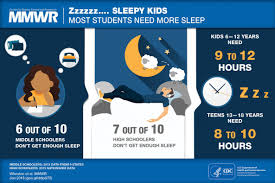
According to the Sleep Foundation, sonologists say that teens should be getting 8-10 hours of sleep each night, but what they usually get is 6.5-7.5 hours of sleep each night. There are things that prevent these teens from getting the right amount of sleep like being on devices around bedtime. This slows the production of melatonin which affects the hormone controlling your sleep cycle. Drinking things with high caffeine can also interfere with your sleep, because it may affect your melatonin levels.
Not getting enough sleep at night can have serious effects. To start, there can be serious and long-term physical health issues. Other effects are things such as concentration difficulties and a short attention span. These things happen because your brain cells are not being fully charged and they only refresh when you sleep for the right amount of time. When not getting enough sleep, you can also increase the risk of depression because your emotional resilience is being weakened.
I asked some peers in high school about how much sleep they get on a regular school day and how this affects their everyday activities. Kobe Detvongsa ‘26 says, “I go to sleep around 10:30-11pm and usually wake up at 6am. This gives me about 7-8 hours of sleep. Depending on how much sleep I get determines my performance and my mood. When I do not get enough sleep, my mood is grumpy and I do not perform well, while when I get a good amount of sleep I am in a good mood and able to perform to the best of my abilities.” Brianna Quiles ‘25 says, “I usually get 5-7 hours of sleep. When I get less sleep I find myself tired throughout the day and sometimes I get headaches. When I get to about 7 hours of sleep my tiredness is way less and I also have less headaches throughout the day. I feel if I get more sleep then these conditions will improve.” I think this shows both sides of the argument with Detvongsa getting a good amount of sleep, while Quiles does not. When you get more sleep you can see there are better conditions for your body on a regular day basis.
Most teens undervalue sleep and may not realize the effects it has on them. There are clear benefits from getting more sleep such as improvement in mood and performance, shown in the examples of Detvongsa and Quiles. Then there are other benefits such as sleep keeps you healthy and lets your brain cells recharge and prepare for another day. We have to do things that will allow us to be able to gain more sleep
 The Raider Press