By Krystal Torres ’25
Every student in CT is required to take a language course once in their high school career. Here at Derby High School (DHS), Italian and Spanish are the two language choices offered. Another class that all schools offer as well is an ELL class. ELL stands for English Language Learners. This class is meant to help students who struggle with speaking English and need a little extra help.
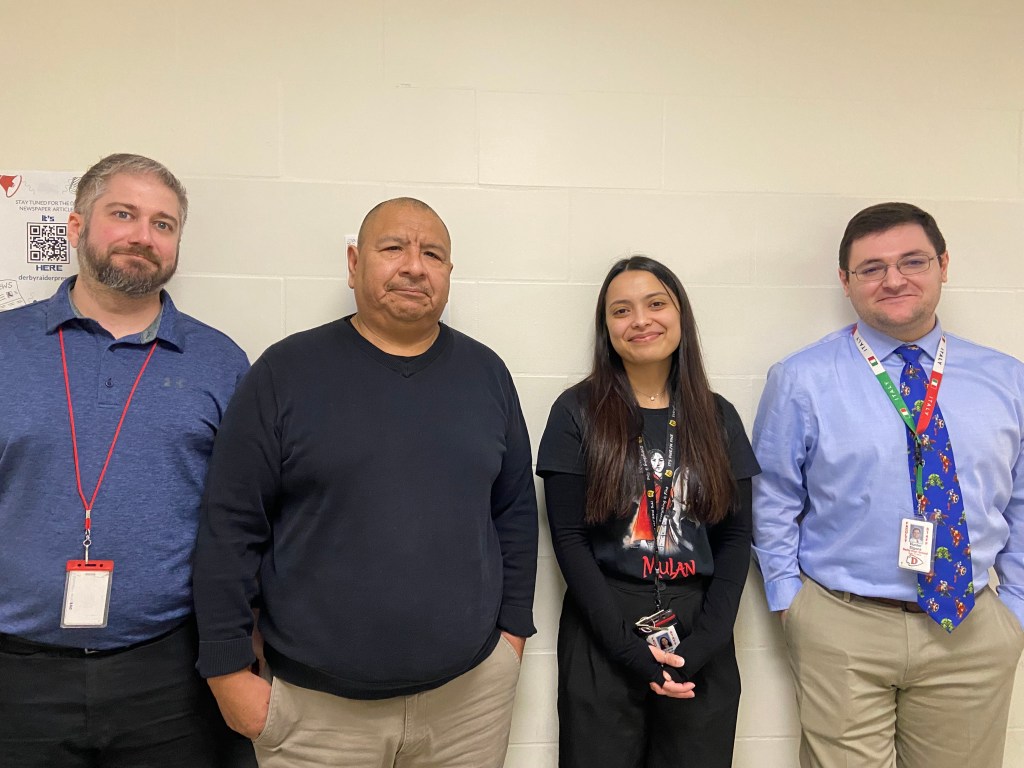
The specific language courses offered at DHS are Spanish I, Spanish II, Spanish III (H), Spanish IIII (H), AP Spanish, Italian I, Italian II, Italian III (H), and UCONN Italian (ILSC 3239/3240). Fransico Salazar and Oriana Camacho teach Spanish, while Hunter Sigona teaches Italian. Students coming from middle school who previously took language classes and excelled in them have the opportunity to be recommended for the next level class instead of the beginner class. Learning another language has many benefits. Sigona states, “ We become so used to language we sort of take for granted what it is we’re actually trying to say when we say things, and when you have to learn another language it forces you to really stop and think about what you’re saying; what you’re trying to express through somebody else’s language and other languages have different ways of expressing things, like the tone of voice that’s used, the actual emphasize that’s placed on words, and sometimes even the way in which things are worded. I think that having to take that step back makes people more conscious about what it is they’re actually trying to say when they have to say it in that other language. It even makes them rethink what they’re going to say in their own language, and that’s sort of what you hope for as a language teacher: to get people to actively think about what they want to come out of their mouth.” Salazar thinks learning another language is important because it’s “ like a tool you can have in your pocket.”
For Sigona, his family is of Italian descent and they didn’t speak Italian fluently or that much. They used words and phrases, but the main language was English. Sigona originally went to school to become a music teacher. “ Funny enough, I didn’t go to college originally with the intention of being a language teacher. My advisor in college said, well, if you’re going to be taking the courses anyway, why not get dual certified? So what I was able to do was I did my undergrad and I cross endorsed the credits.” Sigona says. He then proceeds by saying, “ When I neared the end of my undergrad I knew I wanted to do language as my main. I think I enjoyed the classroom setting more than I enjoyed the music setting because it was more concrete.” Graduating from his master’s program in August of 2019, he’s been teaching for 5 years. He double majored in Italian and Music. He says,” In order to be certified to teach a language you have to major in that language in your undergrad and your master’s degree has to be in secondary language education.”
Like Sigona, English was Salazar’s first language. Both of them grew up here in the U.S. However, Sigona learned Italian through schooling, while Salazar learned it because that’s the language that was spoken in his household, and learned it even more while in school.
Salazar has been teaching for 25 years in total, 23 of the 25 at Derby. Originally he wanted to teach history. However, when he started applying for jobs, he realized that nobody was looking for history teachers, and instead, people were looking for a Spanish teacher. He took the opportunity and that is how his journey began. “Initially, I had my degree in history; that was my goal to teach history, but right off the bat, there was nobody hiring for history teachers. A couple of districts approached me and wanted me to teach Spanish because there was a high need in that subject,” he says.
The other language course at DHS is not required credit, but a class that is set for a specific group of students; the ELL class. ELL classes are only for students who need them; they’re meant for students to better learn and understand the English language. The purpose of this is to help other students whose native language is something other than English. John Stanley is the ELL teacher here at DHS.
Similarly, yet still different than Sigona and Salazar, Stanley went to school with the intention of becoming a teacher but then took a break and became a manager at a Chilis for 10 years. He didn’t feel that getting into education at that time was right for him because he had a lot of personal things going on. However, ten years later, he says, “ I want to do something where if I’m working really hard and I’m getting really tired [it’s for] doing a good job. I don’t want to work for some company, I want to help the community and I feel like teaching does that.” When he did decide to start teaching he didn’t expect to be teaching an ELL class. Originally he was going to help remote learning students. “ I fell into it, they gave me an ELL class to just have something to do when they hired me as a remote teacher and then I loved it, so I ended up trying to go to school for it.” Currently, Stanley teaches two ELL classes ( one beginner group and the other an intermediate group) and also co-teaches in three regular English classes. “Sometimes the kid almost makes me kind of cry when they show how much they appreciate the help and the learning, especially since what we’re learning is the English language, it’s something that they’re using in everything in their life,” Stanley says.
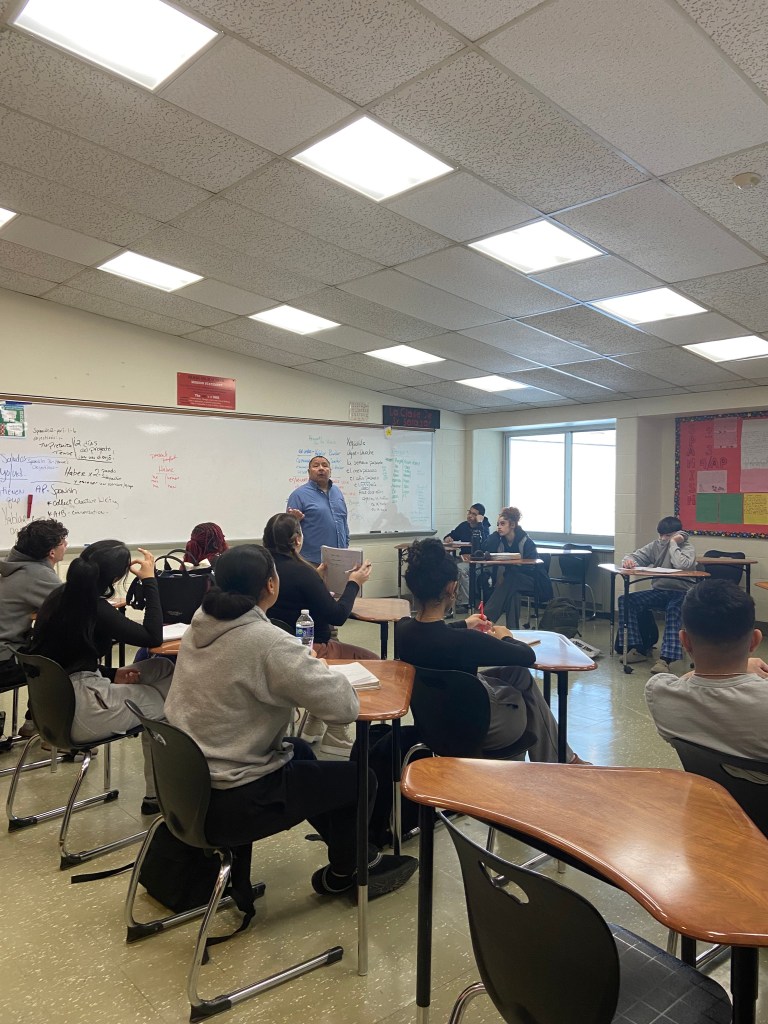

All teachers have different ways of teaching. Whether it’s lecturing like Salazar or giving out work on paper like Sigona, all teachers have their methods. “ I’m definitely a more traditional paper and pencil kind of guy. I don’t do a ton of projects. I think that rote work is important because it’s hard to do projects properly when you don’t know the basics and the basics come from just pen and paper…there are a lot of teachers who think that through creative projects and through creative means of delivering information it will help guide the students get to the knowledge rather than just sitting there telling it to them.” Sigona says. Salazar is big on lecturing during the beginning of his classes. He teaches TPR, which stands for Total Physical Response. According to The Teacher Toolkit.com, TPR is a “method of teaching language that uses physical reactions to react to verbal input.” Using this method, his goal is to get everyone to participate. This enables the students to speak more. “ Everybody has to participate. So everybody learns four to five times. They have to speak every time, so by the time they get out even if they’re not taking good notes, they’re going to learn. They’ll grasp it and be engaged but the good thing about the way I teach is, these kids see results right away that they’re learning. I really feel satisfied when the kids see that they’re learning, to them it’s like a motivational tool.” Stanley says.
Unlike Stanley, Salazar believes that TPR is something all teachers should follow because of the results he gets back from using this method. He sees growth within his students and he feels as if his students see their growth as well, which makes them want to keep learning. For Stanley, he likes to focus on the bigger picture. “I want the big learning to get done and I don’t care about the smaller details.”
When I asked the teachers what they believed the hardest part about language was, they all had different opinions. Sigona says, “ The hardest part of it is probably just doing it. Actually saying to yourself, I’m going to actively try and use this out loud as much as possible because it’s so scary for people, understandably because it’s not your language and you feel like you’re going to make a fool of yourself, but unless you commit to it and just try it, whether you mess up or not, you’re never going to get more comfortable with it.” Salazar does believe grammar is the hardest part. To him the important part is who’s teaching the class and similarly to Sigona, he thinks engaging and getting the students to engage is a big part. “I think whoever is teaching the grammar better be a good engager, because if you don’t catch the grammar it’s going to be really hard to speak it, by memorizing it, how to verbally speak it you want to get the whole understanding on how to use the grammar correctly.”
One thing all the teachers can agree on is that actively participating and being present is the most effective way to learn. “The most effective way to learn is making sure you are actively engaged in what you’re learning. If you’re not actively engaged and you’re trying to just sit and learn through osmosis it’s not going to happen because it requires you to put time in and it’s not just language, it’s any subject, “ Sigona says. Like Sigona, Salazar also thinks participating is important, more specifically following the “three C’s:” culture, communication, and community.
“If you’re sitting there and participating and actively engaging, you should come out the other side with a better understanding of when you first started, but if you sit there in hope of ‘well I’m looking at the board I should get it, it’s not going to work.” Sigona says. This is some advice that all teachers and students could listen to, as well as try to apply it to themselves. The most important part of learning is being engaged and trying your best. While some students may get frustrated or annoyed and even question their teachers on why they do things or question the things they do, what they don’t realize is all teachers have reasoning behind the way they teach and they do this thinking of their students. At the end of the day, teachers want the best for their students.
 The Raider Press