
By Mckeon Gray ’27
When you are having an emergency, the fire department is the first to help you in that time of need. However, these fire departments are having struggles of their own. Fire departments, whether volunteer or paid, are underfunded all throughout the United States. Budget deficits have led to a lack of equipment and unavailability when it comes to personnel, which creates a detrimental effect when it comes to the moment to save a life. The money that most departments are currently receiving is not enough to provide the services promised. This article will dive deeper into the core of the issue and present a solution.
Why is there a shortage of equipment and apparatus? It all began in early 2006, according to The New York Times. Around this time, “A midsize private-equity firm, American Industrial Partners, decided to create one large company out of a collection of small specialty vehicle businesses. They bought up fire truck companies, as well as those making ambulances” (Kovaleski). This large company came to be known as the Rev Group. Over the following years, they acquired more popular fire truck manufacturing companies such as E-One and Rosenbauer. New York Times authors wrote, “Before the pandemic, Rev Group had a backlog of roughly $1 billion worth of fire department orders that were expected to take a year to 18 months to fulfill. That has since jumped to $4 billion worth of orders that they estimate will take two to three years to deliver” (Kovaleski). This backlog of truck orders that take years to fulfill is causing issues down the line that were unprecedented. The second issue at play here is the cost to buy new trucks, as that has almost tripled in the last decade, leading departments to hold onto their trucks long after they are due for retirement. This, however, is causing more money deficits, as the cost of repairs on old trucks has also started to increase as a result of the hoarding on the part of manufacturers of fire apparatus.
Fire departments across the country have felt the shockwave of rising prices and long wait times, and now we are beginning to see the truly detrimental effects. To see these issues as clear as day, think back to the Los Angeles wildfires that occurred in early 2025. Los Angeles Fire Chief Crowley stated in an interview with CNN that the budget cuts “adversely affected the Department’s ability to maintain core operations, such as technology and communication infrastructure, payroll processing, training, fire prevention, and community education” (Ellis). Crowley also noted that “due to the budget cuts, the department lacks the funds needed to support firefighters’ paychecks, and that in turn led to them not having enough firefighters when it truly became an issue” (Ellis). This is a shocking display of fire departments not having enough funds to mitigate an extremely dangerous situation. These funding issues aren’t just happening in Los Angeles; they are happening all over. As the New York Times states, “Truck replacement plans have been upended all over the country. In Chicago, firefighters recently held a mock birthday celebration for a 30-year-old fire engine — twice its expected life span” (Kovaleski). Evidently, the budget deficit put on fire departments in the United States right now is becoming a very severe problem.
Although most of what you hear about fire departments’ budgets being cut is from the biggest towns in the United States or from full-time departments, the real people feeling the heat are the volunteer firefighters, like the volunteers in Derby, CT. Earlier this year, Derby had a ladder truck out for three months because of a miscommunication between the finance committee and the fire commissioner. That is when they posted this message on their Facebook account as provided by The Valley Indy: “We, the Derby Fire Department, are patiently waiting for the city to allocate funds around so we can fix the brakes on the only ladder truck in the city,’” the post read, “as it sits in the firehouse for close to three weeks with no progress from the city to move the funds for emergency vehicles’” (Driscoll). Although this issue was quickly resolved and the ladder truck was repaired, it opened people’s eyes to what has been happening in Derby for the past two decades. Firstly, the truck repairs have become too much to maintain, and despite efforts to buy new trucks, The Valley Indy explains, “In 2022 and 2024, the FD presented plans to replace trucks over the following years, but neither ever moved forward” (Driscoll).

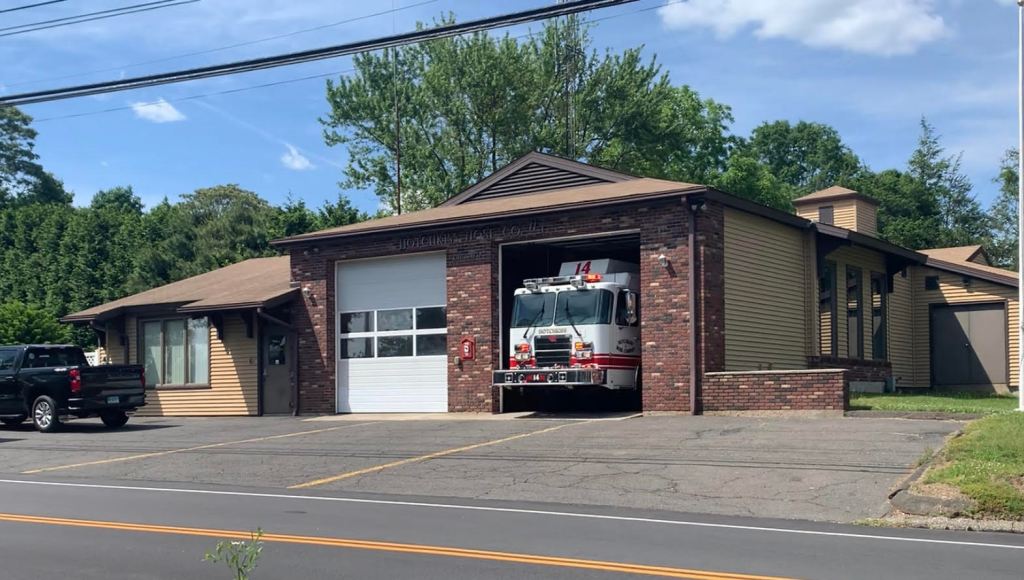
As of right now, the Derby fire department is currently down one engine and one utility truck, meaning that one department, Hotchkiss Hose, had to donate their second engine to East End Hose. The bigger issue at play here is that for most structure fires or severe emergencies, either Shelton or Ansonia needs to step in to provide mutual aid. This becomes serious when you look at the bigger picture of how busy volunteer departments really can be. For example, in an interview with Derby fire chief Tommy Biggs, he stated, “Last year, we did 695 calls. If you break that down monthly, although it kind of fluctuates, you know some months are busier than others, it’s range is about 58 calls a month.” He said there are around “92 certified interior firefighters,” but since they are volunteers, not all 92 are responding each time. The actual number able to respond is closer to 25 (Biggs). He also stated regarding the budget decline, “Over the past, say seven years, it’s been tough, especially after COVID. Prices on things went up, and although our budget also went up, it’s just not enough to handle the increases that were put on us by our vendors. So, you know, it’s tough because the city is strapped, but our budget is considerably lower than it was in 1997” (Biggs).
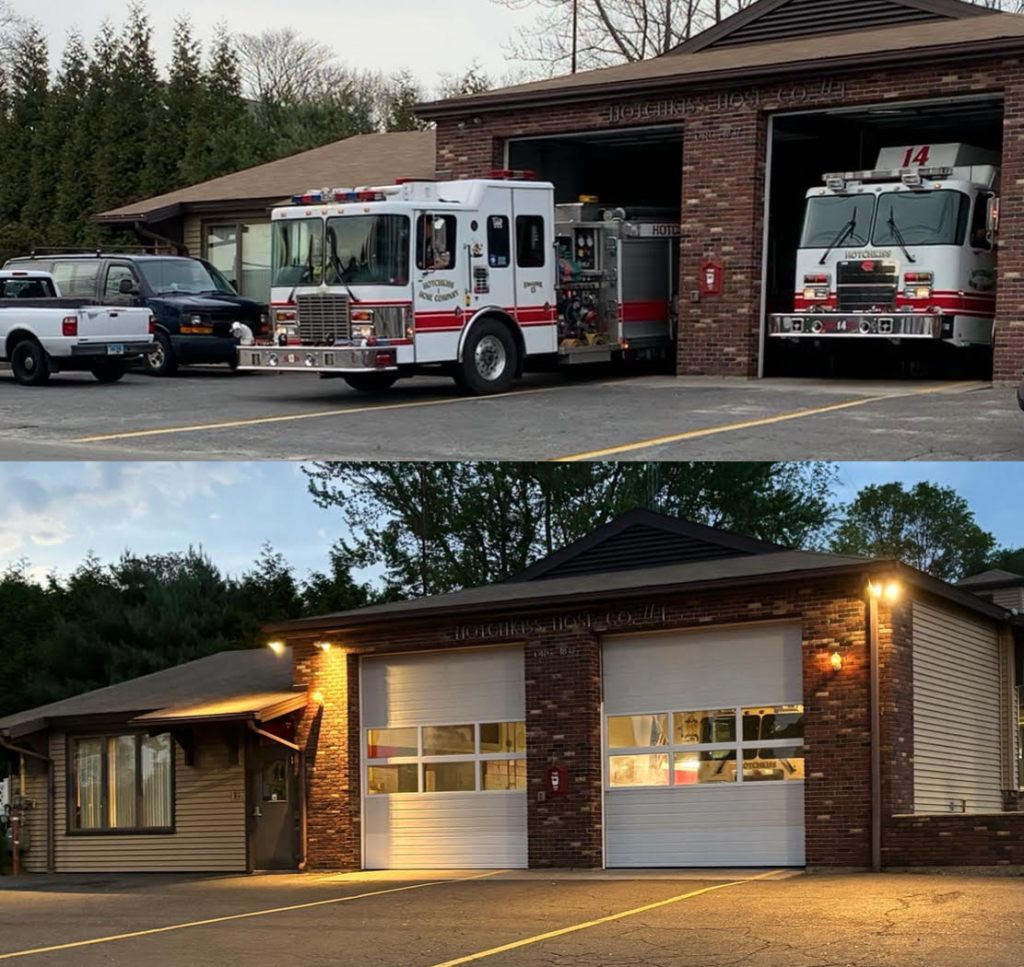
To some Derby firefighters, the year 1997 may ring a bell as that was around the time when the current engine 11 stationed at Storm Engine Company was officially put into service. Now, almost 30 years later, that engine is still responding to almost every call that comes through to the fire department. However, as Biggs explains, “We should have replaced one engine five years ago. We had taken one off the road because of failures; we have another one that should have been replaced probably three years ago, and the city just doesn’t have the money to do it” (Biggs). In addition to the cost of repairing old trucks, the fire department also faces challenges with its old equipment, which almost caused the town to be fined by OSHA if it were not replaced, resulting in the city spending around $500,000. At the end of the interview, Biggs gave one message he wanted the community to hear: “I think the biggest thing that a lot of people don’t understand in the city is that the fire department is all volunteer. We don’t collect a salary, so the budget that we do get from the city isn’t paid towards the salary. The chiefs do get a stipend. It’s not a lot of money, but we’re looking for people, for members, people to help us” (Biggs).
Although some may argue that fire departments receive large sums of money each year that should be more than enough to cover costs, the harsh reality is that the money is just not adequate. As Derby fire chief Biggs stated, “The current administration has raised our budget over the last two years” (Biggs). However, he explains, “The increases from our vendors that we’re getting on things don’t necessarily match what we get from the city. We do our best to make things work as best we can, but it’s tough” (Biggs). Along with that, “Firefighters are often overlooked, and most fundraisers that are done in a public setting are rarely ever considered to donate a portion to the town fire department,” as Chief Biggs explains (Biggs). All in all, despite increases in fire department budgets throughout the US, the increases in equipment costs do not leave them much leeway.
All things considered, the skyrocketing fire equipment costs and large Wall Street investors buying up the main providers of vehicles have required the fire department to request budget increases that towns cannot fund. This has led to an absence of personnel, equipment, and apparatus, making emergency responses even more difficult and dangerous. Therefore, the conclusion can be made that fire departments throughout the United States are underfunded. Without the support from local government and citizens, the fire department’s issue will just continue to worsen.
Works Cited
Biggs, Tommy. DFD Chief Interview. Derby, McKeon Gray, 8 May 2025.
Caughey, Jason. “Why grant funding is important to volunteer fire departments.” FireRescue1, 27 December 2024, https://www.firerescue1.com/fueling-the-flame-the-vital-role-of-grant-funding-for-volunteer-fire-departments. Accessed 12 May 2025.
Cody. “Under Funded Firefighters.” Cody’s Blog, https://sites.isucomm.iastate.edu/cbredman/under-funded-firefighters/. Accessed 12 5 25.
Driscoll, Eugene. “Derby FD Uses Social Media To Lobby For Brake Replacement Money.” Valley Indy, 2025, https://valley.newhavenindependent.org/article/derby_fd_uses_social_media_to_lobby_for_brake_replacement_money. Accessed 12 May 2025.
Ellis, Terry. “Fire department funding and recruitment policy come under scrutiny as deadly Los Angeles blazes rage on.” CNN, 12 January 2025, https://www.cnn.com/2025/01/12/us/fire-department-los-angeles-wildfires/index.html. Accessed 8 May 2025.
Kovaleski, Serge F. “As Wall Street Chases Profits, Fire Departments Have Paid the Price.” The New York Times, 17 February 2025, https://www.nytimes.com/2025/02/17/us/fire-engines-shortage-private-equity.html. Accessed 12 May 2025.
 The Raider Press