
Lazarae Delvalle ’26
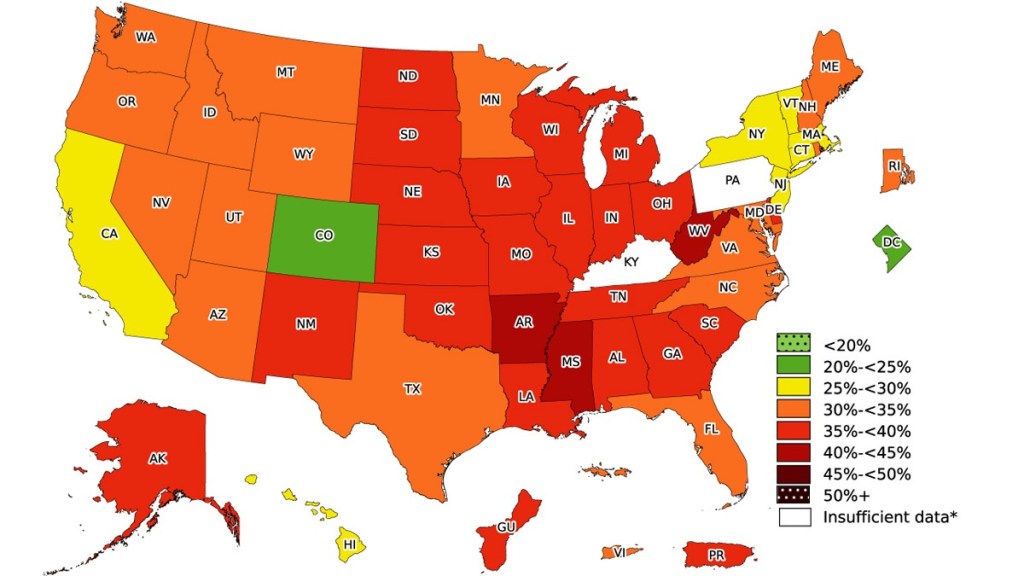
Obesity in the United States keeps rising, but the more common it becomes, the less people seem to react to it. According to a 2025 report from the Trust for America’s Health, about four in ten American adults are obese, and just over twenty-one percent of children and adolescents ages two to nineteen are affected. With numbers this high, obesity has become so widespread that Americans barely notice it anymore, which is turning into a serious health issue that people barely stop to think about.
Derby High School’s nurse, Erin Gregoire, immediately pointed to the cost of health as a major cause. “It has more to do with the prices of food, keeping poor people poor,” she said. “If it’s cheaper, you’re going to buy a pack of ramen for 59 cents, which is not healthy, but it’s sustainable.” She explained that some people do not choose unhealthy food because they want to; they do it because it is what their budget allows or what is most convenient to them.
Derby High School health teacher Matthew Nicolari agreed that the issue goes deeper than personal choice. Before explaining his point, he talked about situations where people are surrounded by mostly unhealthy options, making it nearly impossible for people to choose something better even when they want to. “If your only options for your choices are all unhealthy, even if you want to make a healthy choice, it’s very difficult,” he said. Nicolari added, “Personal choice definitely plays a factor, but I think the system is what’s more to blame.” Basically, people are not ignoring healthy decisions, but they do not have real access to them.
Fast food is another part of the problem. Gregoire explained how convenience becomes a trap. “It’s easier to just grab a quick, cheap McDonald’s burger than it is to go home and prepare a healthy, well-balanced meal.” When unhealthy food is fast, cheap, and everywhere, it becomes the default option, especially for families who are already busy and overwhelmed.
Another issue brought up in the interviews was how body positivity can sometimes confuse the conversation. Nicolari expressed the balance between confidence and health, asking, “How can we be positive about ourselves? Is it not realistic to need to lose weight?” He was not criticizing body positivity but pointing out that loving yourself should not mean ignoring medical risks. Body positivity exists because people should not feel ashamed of their bodies, and shame often does more harm than good. Many people avoid doctors or healthy changes when they feel judged. However, when body positivity is misunderstood as meaning that weight and health no longer matter, it can make the problem harder to talk about. This is what makes the issue so complicated: people deserve respect and confidence, while society still needs to be honest about the health risks connected to obesity.
The normalization of obesity makes this crisis even harder to address. When something becomes common, people stop seeing it as a problem. In this case, the mindset is dangerous. The rise in obesity is not about individuals failing but about a system that makes unhealthy choices easier, cheaper, and more accessible than healthy ones.
 The Raider Press