
By Ava Umpierre ’27
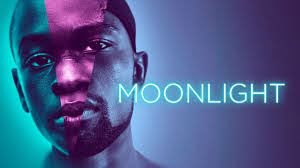
“Who is you, man?” Films driven by drama often tackle the tough issues that individuals encounter every day. Director Barry Jenkins skillfully portrays the struggles of staying true to oneself amidst the negative pressures and influences of society in the film. Moonlight’s featured actresses and actors include Mahershala Ali, who won an Oscar for this film; Trevante Rhodes; Ashton Sanders; André Holland; Janelle Monáe; Naomie Harris; and more. The film was released on Sept. 2, 2016, at the Telluride Film Festival in Colorado, before opening in theaters on Oct. 16, 2016.
We first meet Chiron, the main character, as a young boy, around 7 or 8 years old, living in a poor Black neighborhood in Miami. At this stage in his life, Chiron is very quiet and keeps to himself. His mother struggles with drug addiction, so Chiron is mostly left to take care of himself. He is ignored by his mother and bullied or excluded by other kids, which makes his life very lonely. The other kids nicknamed him “Little” because he was quieter and more passive, making him seem inferior. His only real friend is Kevin, who will become more impactful later in the story. The only positive influence in his life is Juan, a local drug dealer who shows Chiron kindness and attention. Juan feeds him, gives him money, and teaches him how to swim. He also brings Chiron to the home he shares with his girlfriend, Teresa. In their home, Chiron finally feels safe and supported, unlike at home with his mother. It is also one of the few places where Chiron speaks openly. The few things he says reveal his confusion and inner struggles, such as when he asks, “What’s a f*ggot?” “Am I a f*ggot?”, and points out the painful truth; “My mom does drugs” and “You sell drugs.”
Growing into adolescence, Chiron tried to drop the name “Little.” It doesn’t work with his bullies, who torment him daily for being quiet and passive. He spends his days dealing with constant bullying at school and interacting with his mother, whose drug addiction has become even worse. Juan, the father figure from Chiron’s childhood, has died, but Chiron continues to visit Teresa, who still provides him with the stable and caring home he does not have with his mother. During this time in his life, Chiron has a sexual experience on a beach with his childhood friend Kevin. However, the next day at school, Kevin is pressured by the bullies to violently attack Chiron. After treating his injuries by putting his face in ice water, Chiron returns to school and finally snaps, violently attacking his main bully, Azu. The last we see of teenager Chiron is him being shoved into a police car, with Kevin watching.
We then meet Chiron again, more than ten years later, and he is almost unrecognizable. He is muscular and wears a gold grill. His appearance closely resembles Juan’s, from the car he drives to the hat he wears. His attitude, like Juan’s and those around him, is no longer passive or vulnerable. We learn that after attacking Azu, Chiron moved to Atlanta, Georgia, where he became a mid-level drug dealer, just like Juan. He still starts his mornings by putting his face in ice water, showing that some of his old habits remain. His routine is interrupted by an unexpected phone call from his childhood friend, Kevin, prompting him to return to Miami to see him. Kevin is shocked by how much Chiron has changed and questions the person he has become. Before the night ends, Chiron tells Kevin that he was his first and only sexual experience, and the film ends with the two sharing an intimate embrace.
Barry Jenkins’ 2016 film “Moonlight” shows how difficult it can be to stay true to yourself when society pressures you to be someone else. People are often pushed to fit stereotypes, act in ways others approve of, or change just to survive in a harsh environment. Juan explains this idea when he tells Chiron, “At some point, you gotta decide for yourself who you’re gonna be. Can’t let nobody make that decision for you.” This quote highlights how society constantly tries to shape people into someone they are not, especially those growing up in difficult circumstances. Because of this pressure, people hide who they really are and slowly become someone they don’t even recognize.
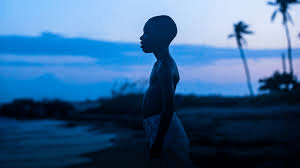
In “Moonlight,” moments of freedom are rare but powerful, as seen with Chiron’s attack on Azu, and his intimacy with Kevin. When these moments do appear, they can be described as standing under the moonlight by the ocean; their skin reflects a tint of blue, they look different to others, but at the same time, they feel free under the presence of the moon and the moon alone. “In moonlight, black boys look blue,” a reappearing cinematic visual in the film, another transforming imagery of self-acceptance in your identity. Even though being yourself can make you vulnerable to judgment, it is often in these moments that a person feels the greatest sense of freedom.
 The Raider Press