
By: Mianna Burke ’28
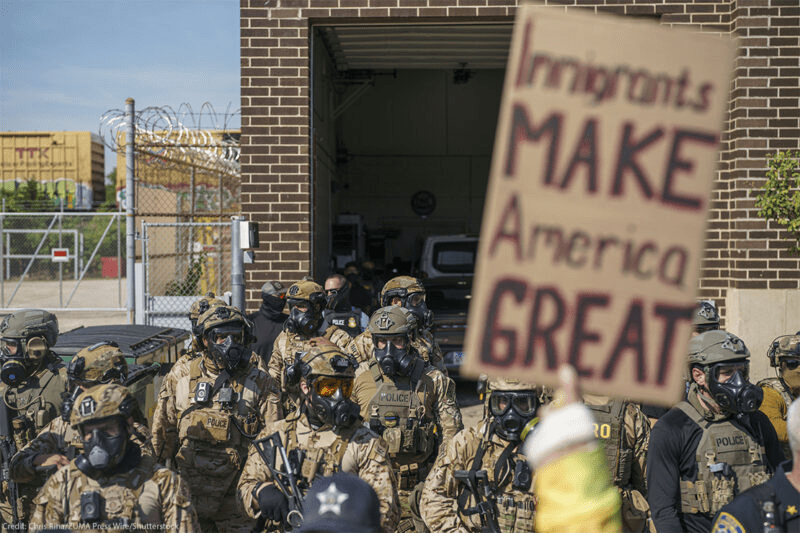
U.S. Immigration and Customs Enforcement (ICE) has been at the center of national debate for years. As a branch of the Department of Homeland Security, ICE is responsible for enforcing immigration laws within the United States. The agency’s job includes detaining undocumented immigrants, conducting workplace raids, and removing individuals who violate immigration laws. While supporters argue that ICE protects national security and upholds the law, critics believe its practices raise serious humanitarian and constitutional concerns. One major issue involves detention conditions. Reports from advocacy groups and journalists have described overcrowded facilities, limited access to medical care, and prolonged detention without clear timelines. These concerns have sparked lawsuits and public protests, especially when families and children are involved. Critics argue that civil immigration violations should not always result in long-term detention.
Another issue arising consistently is whether students are truly safe at school. Reports of ICE agents being seen near schools in the United States have caused fear among students, parents, and teachers. Some families worry about detentions happening during drop-off or pick-up, which makes it hard for students to focus and feel secure.
Parents avoid school events out of fear, and teachers feel unprepared or stressed about how to respond if agents appear. In the article “How ICE Raids Are Affecting Children” by Nirvi Shah, an interviewee, Vázquez Baur, states, “Your child is going to leave with the idea that school isn’t for some kids,” she says. “This will touch every child in some way—and that was before the violent escalation.” Similar concerns arise when agents are reported going door to door in neighborhoods. Overall, the situation creates anxiety and weakens the sense of safety schools are meant to provide.
Other controversies center on enforcement tactics. Workplace raids and neighborhood operations have led to claims of racial profiling and fear within immigrant communities. Local governments have responded by adopting “sanctuary” policies that limit cooperation between local law enforcement and federal immigration authorities. Supporters of these policies argue they build trust between police and immigrant communities, while opponents claim they weaken federal law enforcement.
Political leadership has also shaped ICE’s role. Different presidential administrations have prioritized enforcement differently, influencing arrest numbers, deportation policies, and border strategy. Immigration continues to be a political issue; debates over ICE reflect many disagreements about border security, human rights, and the balance between law enforcement and compassion.
ICE is one of the most debated federal agencies in the country. The discussion continues as lawmakers, courts, and communities weigh public safety concerns against civil liberties and humanitarian values.
 The Raider Press